Alex Blommestijn, Insight Vision
 Germany24 Min
Das Video kommt von YouTube und lädt erst, wenn du auf Abspielen klickst.
„Design is not only about expensive chairs out of Italy or expensive design somewhere from Paris. No, it is about the whole logic and the routing in the hotel that is optimized.“
Alex Blommestijn, 09:30
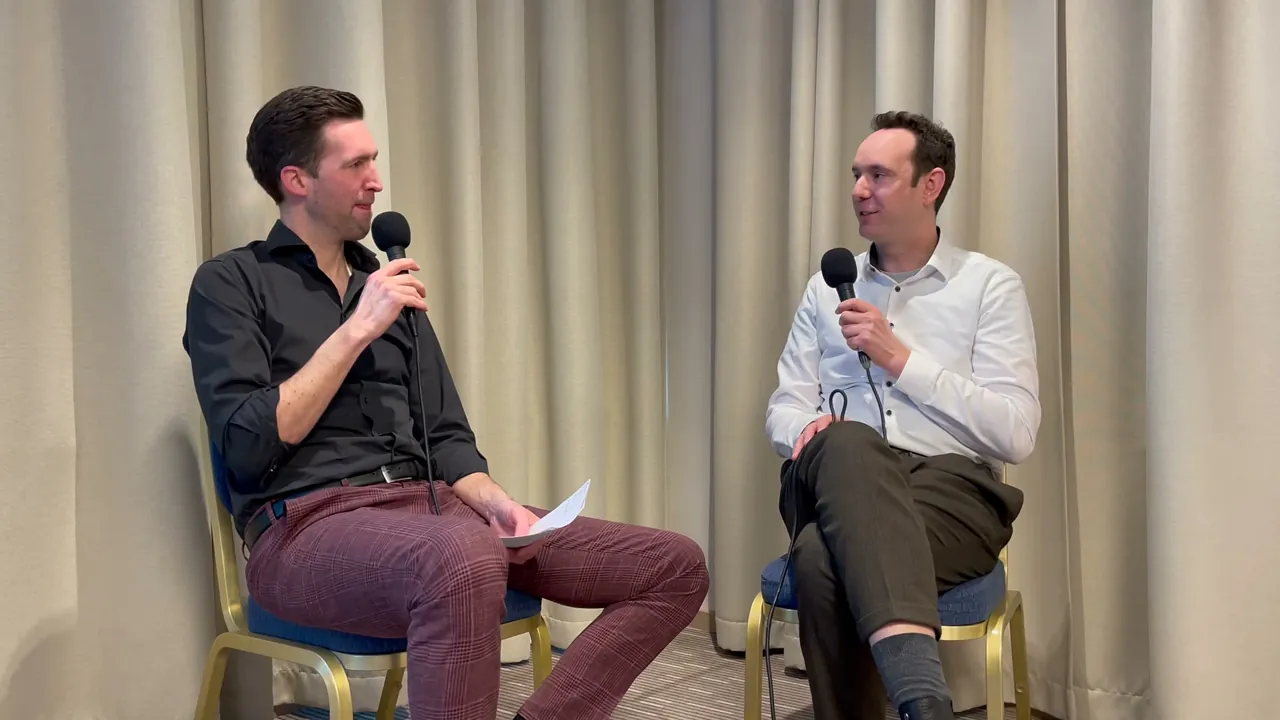
Alex Blommestijn ist Bauingenieur aus Amsterdam und führt mit seiner Frau Marina das Interior-Design-Büro Insight Vision in Wiesbaden. Im Gespräch mit Ronald M. Arndt erzählt er, wie eine Karibik-Kreuzfahrt ihn nach Deutschland brachte, warum für ihn das Routing im Haus mehr zählt als teure Stühle und wie Corona sein Geschäft anderthalb Jahre auf Privatkunden umstellte. Dazu kündigt er HOTEL-PODCAST Benelux auf Niederländisch an.
Die Audiodatei kommt beim Abspielen von Spotify for Creators. Vorher wird nichts geladen.
Kernaussagen
- Weg in die Branche: Mit 15 machte Alex ein Schülerpraktikum bei Architekten in der Amsterdamer Innenstadt, danach lernte er Bauingenieur. Als Projektleiter eines Hostels in Haarlem merkte er, dass ihm Hotels mehr liegen als Wohnungsbau.
- Design ohne großes Budget: Kleine Familienhotels halten Design für zu teuer. Alex hält dem entgegen, dass auch eine gute Geschichte reicht, und nennt ein Rock-and-Chill-Hotel in Nürnberg, das mit seiner Nische voll ausgebucht ist.
- Routing vor Möbeln: Für ihn entscheidet die Logik und das Routing im Haus, nicht der teure Stuhl aus Italien. Wenn die Wege im Frühstücksbereich nicht passen, trägt der Betrieb das sieben Jahre lang mit.
- Corona drehte das Verhältnis: Normal macht Insight Vision 90 Prozent Hotelprojekte und 10 Prozent Privatkunden. Anderthalb Jahre lang war es umgekehrt, weil Hotels Projekte stoppten und Privatleute plötzlich ihr Zuhause umbauen wollten.
- Bau gegen Hotellerie: In der Hotellerie lautet die erste Antwort auf einen Gästewunsch ja, auf dem Bau erst mal nein. Alex sieht seine Rolle darin, zwischen Betreiber und Handwerk zu übersetzen, etwa wenn neben belegten Zimmern gebohrt wird.
Shownotes zur Episodeaus dem Podcast-Feed
We’re more than happy to welcome Alex Blommestijn from Insight Vision as the new host of HOTEL-PODCAST.COM BENELUX.
Together with the Dutch hospitality design expert, the REALTALK.NETWORK expands its reach into another exciting region.
But where does Alex come from — and how did a trip to the Caribbean change both his personal and professional life?
Later, he founded his company in Wiesbaden, Germany, and today he works with hotel brands around the world.
We discuss the power of storytelling and how hospitality design has evolved over the years.
What are the biggest differences between the Netherlands and Germany? And which iconic hotel would Alex love to redesign if he had the chance?
Thank you so much for joining us — we’re very much looking forward to our continued collaboration!
Keine Episode verpassen
Folge HOTEL-PODCAST dort, wo du sowieso hörst. Neue Episoden aus sechs Ländern kommen dann ganz von selbst. Oder tritt unserer WhatsApp-Community bei, um über alle Neuigkeiten auf dem Laufenden zu bleiben.
Weitere Episoden
Alle Episoden
Transkript
Transkript öffnenTranskript schließen24 Min · Ronald M. Arndt und Alex Blommestijn
Automatisch transkribiert mit AssemblyAI, Sprecher automatisch zugeordnet. Nicht redigiert.
- 00:00 Ronald M. Arndt
Good morning, Alex.
- 00:01 Alex Blommestijn
Good morning.
- 00:01 Ronald M. Arndt
Your last name, a little bit too difficult for me.
- 00:05 Alex Blommestijn
Blommestijn.
- 00:07 Ronald M. Arndt
Oui. How does it come?
- 00:09 Alex Blommestijn
Yeah, a Dutch name.
- 00:10 Ronald M. Arndt
A Dutch name.
- 00:10 Alex Blommestijn
Yeah, so that's very difficult. I live in Germany, so mostly I just order restaurants with another name because otherwise they ask, Buchstabieren bitte? So I need to spell it and explain, and then we are 3 minutes further, and I think like I just need to, I just need a hotel room, I just need a table in the restaurant. So then it's, yeah, I mostly say another name, that's just easier, but Blommesteyn, yeah.
- 00:37 Ronald M. Arndt
So we just had breakfast, so it worked this time with the reservation?
- 00:42 Alex Blommestijn
Yes, exactly, that worked.
- 00:45 Ronald M. Arndt
And I'm looking forward to our conversation today. How did it come that you're in Germany and for how long already?
- 00:54 Alex Blommestijn
Yeah, already 11 years this year. 2nd of April, 2014, to be precise. Yeah, long story short, I went with my brother on a vacation in the Caribbean. We went on a cruise. First, we went one week to the West Caribbean, then the second week we went to the East Caribbean, and on the second week we met 2 ladies.
- 01:20 Ronald M. Arndt
Mm-hmm.
- 01:20 Alex Blommestijn
And yeah, long story short, I'm married with one of the ladies and my brother is married with the other lady.
- 01:30 Ronald M. Arndt
No.
- 01:31 Alex Blommestijn
And they had together an interior design company in Moscow, in Russia. And yeah, I'm a construction engineer. And then I said, okay, let's, yeah, let's work together. Let's start a company together. So I always make a joke, but it's a bit of the truth. I lied to my wife and I said, let's meet up in the middle. And then we ended up in Wiesbaden. What is, 4 hours away driving from Amsterdam, but a little bit more than from Moscow. And I lived first in the inner city of Amsterdam. I had no garden. I thought, wow, it is here too crowded. And then we searched for places, we drove around here, and yeah, that's how we ended up in Germany.
- 02:13 Ronald M. Arndt
So today, this morning, we are in Offenbach next to Frankfurt.
- 02:17 Alex Blommestijn
Yes.
- 02:18 Ronald M. Arndt
Why? What's the background?
- 02:20 Alex Blommestijn
Yeah, we are guests here in Delta Hotels by Marriott, and yeah, we start here with the soon with a refurbishment renovation of the yeah the the public areas in the hotel. So not the rooms, but we're going to do the breakfast area, reception, and yeah everything where you experience the hospitality of Marriott. So and it's it's about 45 minutes driving from our office. It's for the first time one of our projects near our office, I would say, because we work not only in Germany, but worldwide, and the first projects we did were in the Netherlands because for us it was easier. In the meantime, and during Corona, Marina, my wife, she studied Dutch as well, so she speaks 4 languages. She speaks Dutch, German, English, and Russian. And yeah, for an international company in hospitality, that's very useful.
- 03:16 Ronald M. Arndt
And how did you get into the industry?
- 03:19 Alex Blommestijn
Well—
- 03:20 Ronald M. Arndt
Directly after school studies, or?
- 03:23 Alex Blommestijn
Yeah, it was not so difficult. I was 15 years old. We just talked about it by breakfast, but I mean, every country has that you need to do an internship for a week when you're young. I did that. I did that in the inner city of Amsterdam, and there were all architects working on, yeah, restoring the old city. I loved it, and then I thought, okay, let's learn construction engineering, and that's how I started there. And then one of my latest projects before I went away from Amsterdam. I was project leader of a hostel in the inner city of Haarlem, and I liked it so much more than houses because every time you could come back there and you could show also your family, but also clients, like, this is what we made. And yeah, we were always welcome to come back. So then I thought like, yeah, I like this industry very much. Now, and then with my wife together, we thought, okay, we want an interior design company. to build up together, where we, in what branch we will do that. And then we said, okay, we choose ourselves really for hotels. And yeah, since 10 years now, we are designing interiors for hotels. And yeah.
- 04:41 Ronald M. Arndt
So you started your company in Germany?
- 04:45 Alex Blommestijn
Yes, yes. We made plans in Yeah, I would say in the Prinsengracht, the kennel house in Amsterdam. There we were with Christmas and we were thinking like, how can we start? And then we had to brainstorm and then we said, okay, we're gonna do that in Germany and there we start and from there out we can work. Why Germany? Most of the people would ask. Well, we are 15 minutes away from Frankfurt Airport.
- 05:10 Ronald M. Arndt
Mm-hmm.
- 05:11 Alex Blommestijn
In that time, there were 15 flights to Moscow and 15 to Amsterdam. To Amsterdam, they are still going. But the highway connections are really good and the train connections are also really good because in 4 hours you can be with the train in Amsterdam. So that's the reason why.
- 05:26 Ronald M. Arndt
Okay. What's the story behind the name Insight Vision, your company's name?
- 05:30 Alex Blommestijn
Yeah, that's also going back to these Christmas days in Amsterdam city center. We were thinking about names and we thought, okay, let's make it international in English because, yeah, we will work international. And then we thought Insight because we are designing insight, but that was, we thought, too easy. And in construction, and especially in hotel industry, you need to look forward. And I can talk later about it, but the differences between construction and hospitality are, I think, gigantic. So we thought like, okay, Insight, then you look through. And vision, yeah, that auf Deutsch Vision. So we thought like, yeah, that's a good name for it. So let's do that. But we had many options, I must say.
- 06:18 Ronald M. Arndt
So today you're involved in hospitality projects, but also residential?
- 06:22 Alex Blommestijn
Yeah, also residential. The crisis, the Corona crisis was for us a really hard hit because we, naja, I can tell a story. We were sitting by a Radisson Blu Hotel in the Netherlands. And 3 days before Corona started, we were sitting with the hotel manager and thinking like, hahaha, Corona, oh, that will not be so far. His wife wanted to go to a concert in October. Now it was March, so it was so far away. And we were all laughing like, October, Corona, ha. And she was afraid that she could not go to the concert and they were not sure if they should buy the tickets. 3 days later, we were back in Germany and we got the call, we're gonna— oh yeah, we are in total lockdown. Thank you very much for your offer, but we will not proceed with it. Now, yeah, long story short, uh, the hotel was sold, uh, sold, and we never got the— never got the project, unfortunately. And that was 2 years of real, uh, difficulty with projects. Some hotels really wanted to renovate directly because it was staying empty.
- 07:32 Ronald M. Arndt
Mm-hmm.
- 07:32 Alex Blommestijn
But the ones that did not have the plans Didn't want to start because they were not sure, yeah, what it will be in the next couple months, years. So strange enough, we got a lot of calls from private clients. They were all looking around like, hmm, that wallpaper is boring, or I want to change something. So we, I remember that we made an offer in August for a private client. We never heard something back. And then in April the next year, they called us, can you start tomorrow? Because I I hate my house and I want a different interior. So, and then started it off that we had, normally we have 90% is hotel projects what we do and 10% private clients. And in corona time, yeah, 1.5 years, it was completely upside down. We did 90% private clients and 10% hotels. Luckily, we are back in the hotel industry again and yeah, we can grow our hospitality projects and private clients is less now. Yeah.
- 08:36 Ronald M. Arndt
Was it even harder being an entrepreneur's couple during these hard times or an advantage here?
- 08:43 Alex Blommestijn
Was it harder? Yeah, maybe not because you are finally not so stressed out anymore because normally my wife say always it's like a train. We have projects, they are all on the train and then the project is finished, you're standing by the train station and then you think like, yeah, Okay, I run so hard, but now I'm there, so it's fine. And then start a new project again. So we have mostly that we have it really, really busy, and then out of nothing, it becomes quiet again. And then 1, 2, 3 months later, it gets busy again. So that was also a good experience, I must say, to have this.
- 09:22 Ronald M. Arndt
How does interior design or in the hospitality especially has evolved? Over the last years or since corona? Is there any—
- 09:30 Alex Blommestijn
It evolved a lot, I think, and I think it has a lot to do with storytelling and concepting, and you need to have a good story and a good design to really attract a lot of clients and have a high occupancy rate. What I have seen, especially because we were on the Independent Hotel Show in Amsterdam and Munich last year, And what we see is that the independent hotels, the smaller family hotels, they think design is too expensive for them and they should not do that because, yeah, it costs too much. I think that's not only— that's not the case. That's first of all. And second of all, I think especially because you do design or it don't need to be design, it can be also just a nice story behind the hotel, is that you attract special clients and guests and that you get Yeah, yeah, more, uh, uh, more people into your, into your hotel. I think it especially can boost your hotel. I, I, a couple weeks ago I was in Nuremberg. I, I saw on a, on a presentation somebody that made a rock and chill hotel. I, I thought, yeah, well, that's a great concept because it's something else than all the other families around it. You make something really for that niche, for market and is fully booked because he made something special. And design is not only about expensive chairs out of Italy or expensive design somewhere from Paris. No, it is about the whole logic and the routing in the hotel that is optimized. And that's what we're standing for and that's what we do. Also the practical way of interior design and hotel operating because it's not about The chairs only. It is much more. It is that your whole concept is working and that the operational side of the hotel is even more expensive almost, I would say, because that you do on a daily basis. So if you, yeah, if the routing from your breakfast area is not optimal, you will regret that for the next 7 years that you're not updating your hotel.
- 11:47 Ronald M. Arndt
Mm-hmm. So in that case, can you start or do you want to start with a project if there's no story or a story you don't like?
- 11:56 Alex Blommestijn
Good question. Yeah, mostly we look in the area, what's the story behind it? In which case should I answer this, I would say, because—
- 12:09 Ronald M. Arndt
Sometimes you just have to, huh?
- 12:12 Alex Blommestijn
Yeah, we love old buildings. We also do in the inner city of Amsterdam a hostel, for example. Yeah, and we love old buildings because of course it has a history and you can tell something about it in the story of the hotel. But sometimes we have a complete new property. I would say we did the Nieuwe Stijls in Haarlem, one of our first big hotel projects. Yeah, that was on— yeah, in the Netherlands they would say the Sport Boulevard, but it was kind of ice skating and this kind of things were all in the area. And then we designed the hotel with in mind all the sports that you can do in the area. So we designed our own wallpapers and we made 8 sport rooms. So we have 109 rooms there and in each room you can find one of these 8 sports that are done in the area, that you can play in the area. That doesn't mean that when you make a reservation that you can say, I would like to have the tennis room, for example. You can try it, but it is not that it is a themed room, so to say. So each room, the basic furniture and fixtures and equipment is all the same in each room.
- 13:28 Ronald M. Arndt
Earlier this morning you said that you are quite experienced in wallpapers.
- 13:32 Alex Blommestijn
Yeah, that's—
- 13:33 Ronald M. Arndt
You still like—
- 13:34 Alex Blommestijn
That's correct.
- 13:35 Ronald M. Arndt
The topic or?
- 13:36 Alex Blommestijn
Yeah, the topic is interesting, but we started with that because my wife had an interior design studio in Moscow and there she had also a wallpaper shop.
- 13:44 Ronald M. Arndt
Mm-hmm.
- 13:44 Alex Blommestijn
Uh, yeah, together in, in, in the office worked really well. And we thought, oh, let's do the same in Germany. Well, I would say the most sold color that we had of wallpapers were beige. So by us in the company, we say that all the time when a client asks like, oh, uh, beige, I like that. We say beige, beige, because we had the feeling it was old. But no, we, we, yeah, we had 10,000 different wallpapers in our shop. And to be honest, with private—
- 14:18 Ronald M. Arndt
You still have them?
- 14:18 Alex Blommestijn
We still have them. But with private clients, we better select, pre-select for them and say, here you have 10 types of wallpapers that would fit to your house. Otherwise, you're standing the whole day by us in the office and looking at it because, yeah, it's overwhelming. It's too much. Yeah.
- 14:37 Ronald M. Arndt
What are the biggest differences between the Netherlands and Germany? So perhaps first in being entrepreneur.
- 14:45 Alex Blommestijn
Being an entrepreneur.
- 14:47 Ronald M. Arndt
What did your Dutch friends tell you about Germany? How do you see it?
- 14:54 Alex Blommestijn
Yeah, we see it ourselves. So when we go to exhibitions now after 10 years, we could see really a difference between a German and a Dutch company, but also Now, yeah, and other countries, it would not be— I don't see it as negativity, but in the Netherlands they say first, would you like a coffee? And please sit down, and these are our wonderful products. And how we sometimes experience it, because yeah, we are interior designers, so we work a lot with suppliers and we really want to know more about the chairs, the curtains, or whatever. What they have to offer us. And then they say first in Germany, no, no, these are our rules. This is how you can distribute it. This is how you can buy it. So there's a different mindset. The good thing I think is that they always call directly and say, oh, I would like to come in your office and get to know you. So yeah, that works different than in the Netherlands, but at the end it both works. So you built up a long relationship in Germany with the account managers of the companies. That's how I see that.
- 16:06 Ronald M. Arndt
So this was how you see both countries as entrepreneur. Talking about hospitality, are there any big differences or—
- 16:16 Alex Blommestijn
I think big differences in hospitality, not, but big differences, there is no bigger difference, I think, between construction and hospitality. And we have always to do with construction because we always want to make something new. I would say, In hospitality industry, when a guest comes and asks, oh, can I have this and this? Then the answer of the, of the hotelier is always, uh, yes, we do. And then later they find out, or they find out, they're gonna think about how, how, who's gonna pay for it and how we're gonna do this. But the solution is there always. And in the construction side, what I mostly experience is first, no, cannot be. No, we don't do this. We never done it. No, we don't want to do it. Then comes the question, who's going to pay for all and how much expensive is it? And after all, maybe they have a solution. And that's, yeah, that's, that's, we are used to it because we come out of that industry. But sometimes we have hotel managers that don't understand anything from it, that they are making drilling holes next to rooms that are already rented out. And in the construction industry, they think like, now I need to finish this room today. And And if the whole hotel has problems with it, I'm sorry, but I'm now here, so I do it now or I do it never. I make it a bit extreme, but that are the biggest differences that we experience between construction and the hotel industry, and that's where we really come in and to help the operator to tell, no, we need to do it on this and this way, otherwise it'll never work for the contractor. Mm-hmm.
- 18:00 Ronald M. Arndt
So until today, the most projects were in the Netherlands.
- 18:07 Alex Blommestijn
Yes, but we did 2 in Kazakhstan, so far away. We did a couple in Belgium. We went even to Spain. Unfortunately, what most of the times happens is that we make studies, we design it, and then we wait for the building permit, and that can take a while. So in the Netherlands, In the Netherlands, it's not uncommon that it takes 2 years before you have finally a building permit. So yeah, we have still projects in the pipeline where we hope that they soon start, but yeah, it can take a while.
- 18:42 Ronald M. Arndt
That's the word DACH for the German-speaking markets and Benelux for the Netherlands, Belgium, and Luxembourg. Where are the connections between Belgium and the Netherlands? It's a cultural connection or—
- 18:55 Alex Blommestijn
Yeah.
- 18:55 Ronald M. Arndt
It's not the language.
- 18:57 Alex Blommestijn
Exactly. It's not the language. Cultural, I think it's also, it's going pretty well. We did, for example, in Belgium, a large hotel, a large project, and there was a Dutch project leader involved. So that made it for us, I would say, not easier, but yeah, really nice to work together. Yeah, I loved it. I had no problems at all in Belgium. Sometimes I like it even more to work there. Yeah.
- 19:27 Ronald M. Arndt
Okay. So Belgium and the Netherlands are often working together?
- 19:30 Alex Blommestijn
Yes.
- 19:31 Ronald M. Arndt
Yes.
- 19:31 Alex Blommestijn
Yes. Yeah. Yeah. Yeah. No problem at all with that.
- 19:35 Ronald M. Arndt
And then in Belgium, you speak English or is that—
- 19:37 Alex Blommestijn
No, no. Dutch. Dutch? Okay. Yeah. Yeah. Yeah. One part Dutch and the other part French. So, and of course they have other words, but no, it goes very well. I must say, To be honest, when we did our first big project in Belgium, I had a really fast course with Belgian words that we don't use in the Netherlands, but they're still Dutch. So yeah, I could understand it, but I would never use them. But they used them. And yeah, I knew very— I've learned it very quickly and it was okay.
- 20:12 Ronald M. Arndt
We talked about— what was the name in Vienna from the iconic hotel?
- 20:16 Alex Blommestijn
Imperial Hotel.
- 20:19 Ronald M. Arndt
Yeah. If you could redesign any of these iconic hotels, which one would it be? Is there one?
- 20:27 Alex Blommestijn
This one it would be.
- 20:28 Ronald M. Arndt
Yeah.
- 20:29 Alex Blommestijn
Yes, it's a Marriott hotel. Really beautiful, but you need to be there really careful. I was 12 years renovating or restoring old churches in the inner city of Amsterdam, old canal houses. You need to be really careful that you don't demolish anything what is there. You really should do a soft renovation with the carpet, the curtain, and the chairs. But if you have beautiful chandeliers or lights, please keep them in. It's so beautiful from itself. You don't need really to design it anymore. Cool.
- 21:04 Ronald M. Arndt
Yeah, Alex, thank you so much.
- 21:06 Alex Blommestijn
Thank you very much.
- 21:07 Ronald M. Arndt
For this podcast episode, but it's Not the end.
- 21:12 Alex Blommestijn
No.
- 21:13 Ronald M. Arndt
Between the both of us, as we will start a hotel podcast.
- 21:17 Alex Blommestijn
Yes, exactly. Well, a couple of weeks ago I thought like, wow, what's, what great this podcast. I listen to them all in the car when I drive mostly to the Netherlands. And then I thought like, we don't have this in the Netherlands, so let's introduce it. I called you, I asked you, well, can we do this in the Netherlands? And you said directly, yes, of course.
- 21:35 Ronald M. Arndt
Cool.
- 21:36 Alex Blommestijn
Let's do that. So now we are sitting in Frankfurt, but, uh, yeah, hopefully soon we sit somewhere in the Netherlands and, uh, we make a Dutch Hotel Podcast.
- 21:45 Ronald M. Arndt
Yeah, cool. I'm really looking forward to this. And one of the main questions in the beginning was, uh, do you want to do the podcast in English or in Dutch? But I think Dutch is cool, huh?
- 21:58 Alex Blommestijn
Yeah, I will do it in Dutch. Yeah, that will be, uh, yeah, I think for the Dutch market it would be interesting. And I'm really looking forward for it because, yeah, I think we have some great stories to tell there in the— that will tell us a lot about the Dutch market as well. Yeah.
- 22:17 Ronald M. Arndt
You don't not only have the big brands, hotel operators coming from the Netherlands, but of course also big tech players.
- 22:25 Alex Blommestijn
Absolutely.
- 22:26 Ronald M. Arndt
OTAs, Booking.com.
- 22:27 Alex Blommestijn
Yeah.
- 22:27 Ronald M. Arndt
Founded in Amsterdam in 2005 or '06. Yeah.
- 22:30 Alex Blommestijn
Yeah. The headquarter was even not far away from where I worked 12 years long. I think a 1-minute walking distance. So, no, that's true. Yeah. So we have, yeah, we have a lot of opportunities in the Netherlands to make a great Dutch hotel podcast.
- 22:45 Ronald M. Arndt
Yeah. So even if I don't understand Dutch, perhaps one time I will, I will join you.
- 22:50 Alex Blommestijn
You are always welcome to join. Always welcome to join. And mostly if we speak slowly in Dutch, then Germans can understand as well. So we can try that.
- 23:02 Ronald M. Arndt
Or it's a good moment for me and good challenge to learn a little bit.
- 23:05 Alex Blommestijn
That's true as well. So I heard you speak already French.
- 23:08 Ronald M. Arndt
So French. Yeah, we just did a podcast in French. That's right. Yeah. But that should be really another story for me.
- 23:16 Alex Blommestijn
Okay.
- 23:17 Ronald M. Arndt
I like languages.
- 23:18 Alex Blommestijn
So let's try it.
- 23:20 Ronald M. Arndt
Yeah. So cool. Thank you, Alex.
- 23:22 Alex Blommestijn
Thank you very much.
- 23:22 Ronald M. Arndt
Looking forward to our project. All the best for you, for your company, your wife, you both. And see you soon.
- 23:28 Alex Blommestijn
Thank you very much.
- 23:28 Ronald M. Arndt
In the Netherlands.
- 23:29 Alex Blommestijn
See you there. See you. Bye-bye. Bye-bye.