Pieter Bas van Litsenburg, MEININGER Hotels
Aufgenommen: MEININGER Amsterdam City West, Amsterdam
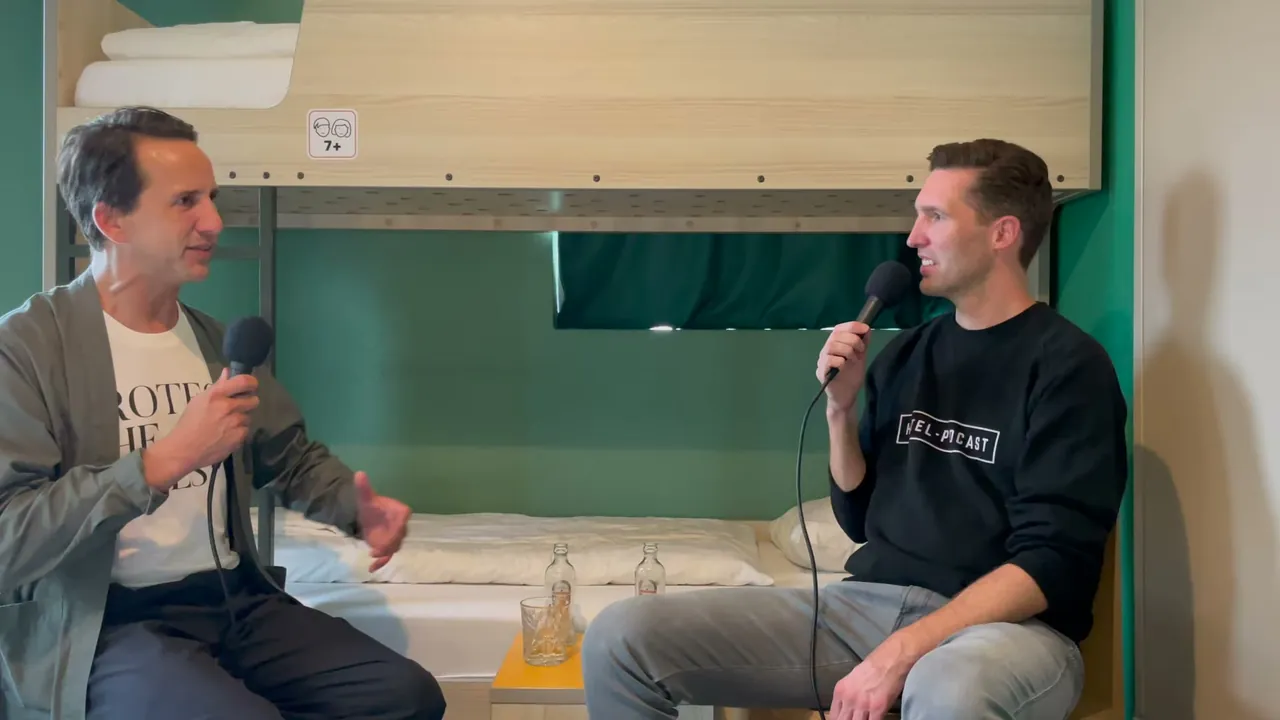 Germany31 Min
Das Video kommt von YouTube und lädt erst, wenn du auf Abspielen klickst.
„Diversity is a fact, inclusion is a choice.“
Pieter Bas van Litsenburg, 04:13
Pieter Bas van Litsenburg ist seit dreizehneinhalb Jahren bei MEININGER Hotels, gestartet als Hotelmanager im ersten Haus der Gruppe in Amsterdam, später Regionaldirektor. Er erzählt, wie aus dem Satz “we’re as diverse as our guests” im Leitbild ein Programm für Diversity, Equity und Inclusion wurde: Hygieneartikel in allen Häusern, Uniformen zum Mischen, geänderte Hausregeln, Schulungen über HR. Sein Rat an andere: klein anfangen, nicht auf ein großes Budget warten.
Die Audiodatei kommt beim Abspielen von Spotify for Creators. Vorher wird nichts geladen.
Kernaussagen
- Fakt und Entscheidung: Für ihn ist Vielfalt eine Tatsache und Inklusion eine Entscheidung: die Unterschiede anerkennen, weil eine andere Perspektive für ihn als Person und für das Geschäft einen Wert hat.
- Bottom-up gestartet: Als MEININGER Mission, Vision und Werte formulierte, stand dort "we're as diverse as our guests". Mit ein paar Kollegen fragte er, wie man das lebt, las sich ein, hörte Podcasts und TED Talks und schrieb einen Plan für zwei bis drei Jahre.
- Erst intern, dann außen: Das Marketing wollte sofort nach außen kommunizieren. Die Gruppe bremste, weil man erst etwas haben muss, womit man das belegen kann. Gestartet wurde mit Awareness-Tagen und einem monatlichen Newsletter für die Kollegen.
- Hausregeln geändert: Weil trans und nicht-binäre Gäste in Frauenzimmern zu Rückfragen führten, ging das Thema an den Vorstand. Ergebnis war ein neuer Absatz in den Hausregeln, "your room, your choice", dazu eine Schulung für alle Mitarbeitenden mit Gästekontakt.
- Barrierefreiheit in Europa: Zum Zeitpunkt der Aufnahme lag der Schwerpunkt auf Barrierefreiheit, für Gäste und für Mitarbeitende. Schwierig macht es die pan-europäische Aufstellung: andere Gesetze an jedem Standort, deshalb braucht es eine gemeinsame Sprache gegenüber Gästen.
Shownotes zur Episodeaus dem Podcast-Feed
Welcome to MEININGER Hotels in Amsterdam!
Pieter Bas Litsenburg, van has been with the hybrid hotel chain for 13 years and shares deep insights into the topic of Diversity, Equity & Inclusion (DEI).
How has MEININGER’s journey toward greater diversity and inclusion evolved, and what is Pieter most proud of so far?
With nearly 40 locations across Europe, MEININGER Hotels is a company where DEI has grown from a grassroots initiative into a topic of increasing relevance.
We talk about the biggest challenges along the way, how to deal with skepticism (because you don’t have to agree with everything), and why meaningful change often begins with small steps—just like the ones Pieter took with a dedicated group of colleagues.
Keine Episode verpassen
Folge HOTEL-PODCAST dort, wo du sowieso hörst. Neue Episoden aus sechs Ländern kommen dann ganz von selbst. Oder tritt unserer WhatsApp-Community bei, um über alle Neuigkeiten auf dem Laufenden zu bleiben.
Weitere Episoden
Alle Episoden
Transkript
Transkript öffnenTranskript schließen31 Min · Ronald M. Arndt und Pieter Bas van Litsenburg
Automatisch transkribiert mit AssemblyAI, Sprecher automatisch zugeordnet. Nicht redigiert.
- 00:00 Ronald M. Arndt
So it's podcast number 4 with the Meining Hotels. After one episode at the headquarters, another at Humboldthaus, the last one in Hamburg. Now I am in—
- 00:10 Pieter Bas van Litsenburg
Welcome to Amsterdam.
- 00:12 Ronald M. Arndt
Amsterdam City West. Amsterdam. Yeah. And again, a very, very nice hotel. So thanks for welcoming us here.
- 00:20 Pieter Bas van Litsenburg
Pleasure.
- 00:21 Ronald M. Arndt
And we are again in a, yes, of course, a family room. Yeah.
- 00:27 Pieter Bas van Litsenburg
Yes, our famous family room for families, for friends, for school groups.
- 00:34 Ronald M. Arndt
Yeah. Great. So you are with Meilinger for a while already or?
- 00:41 Pieter Bas van Litsenburg
For a little while, yeah.
- 00:42 Ronald M. Arndt
Tell me a little bit about it.
- 00:43 Pieter Bas van Litsenburg
13 and a half years already.
- 00:44 Ronald M. Arndt
13?
- 00:45 Pieter Bas van Litsenburg
Yeah.
- 00:45 Ronald M. Arndt
Okay.
- 00:46 Pieter Bas van Litsenburg
Yeah, 1-3.
- 00:46 Ronald M. Arndt
1-3, uh-huh.
- 00:48 Pieter Bas van Litsenburg
I started off as a hotel manager for this very hotel. It was Meiningers' first hotel.
- 00:56 Ronald M. Arndt
Just here, yeah? Okay.
- 00:57 Pieter Bas van Litsenburg
Meiningers' first hotel in the Netherlands, in Amsterdam. And I saw the ad. I knew MEININGER from a previous job and saw they were coming and thought, yes, this is a nice opportunity.
- 01:11 Ronald M. Arndt
Nice.
- 01:12 Pieter Bas van Litsenburg
And yeah, I visited them in Berlin and actually that very same day we agreed that it would be a great idea that we work together. And yeah, that's quite some time ago. And ever since, With the— back then it was like 10, 12 hotels, the MEININGER Group. We are now close to 40, and with that growth, I got the opportunity to grow as well. So once Brussels came into the picture geographically, that made sense that I supported that. And yeah, as the company grew, the region, so to say, grew, and from hotel manager slowly grew into the position of regional director. Damn.
- 02:03 Ronald M. Arndt
Yeah. And today you not only have one hotel in Amsterdam, or?
- 02:06 Pieter Bas van Litsenburg
It's 6, and with one in the pipeline, Edinburgh, that we're opening next year.
- 02:11 Ronald M. Arndt
Yeah. So a very important market, the Netherlands, for MEININGER.
- 02:15 Pieter Bas van Litsenburg
Absolutely.
- 02:15 Ronald M. Arndt
Okay, great. So it's not the first time that I meet someone who's with MEININGER for 10 years and more. Daniela, I think for 24 years. Our second podcast. Incredible. So since the very beginning, what makes Meiningers unique for you? So what did you—
- 02:37 Pieter Bas van Litsenburg
Good question. I mean, it's a bit cliché, but it's the people. What I think makes us unique is that we have managed to, well, we grew and we were not the same business that we were back then, but what stayed is the informal yet professional approach to business. What I love about it as well is that you can have like high-end or business-oriented business models. We, our team, when they're asked for where can I go, what should I see, they can always answer that question from their own perspective because they level with the guests.
- 03:18 Ronald M. Arndt
Mm-hmm.
- 03:18 Pieter Bas van Litsenburg
And that makes it a place where everyone can be themselves. And I think that really adds to the quality and the success of the formula.
- 03:29 Ronald M. Arndt
That's my impression. So there are a lot of touchpoints between the staff, your colleagues, and the guests.
- 03:35 Pieter Bas van Litsenburg
Yes.
- 03:36 Ronald M. Arndt
So if you return the plates and everything in the morning after breakfast, for example, it's unique, but special, right? It makes everything a little very, very human.
- 03:45 Pieter Bas van Litsenburg
Exactly. No, that's a good one.
- 03:48 Ronald M. Arndt
So today we are talking about a specific topic. What?
- 03:56 Pieter Bas van Litsenburg
DEI, diversity, equity, and inclusion, which has become more and more a topic on the agenda, well, globally, but inside MEININGER as well. Yeah.
- 04:10 Ronald M. Arndt
Okay, so what does it especially mean?
- 04:13 Pieter Bas van Litsenburg
What is it? Yeah. Yeah, when that's asked, diversity is a fact, inclusion is a choice. When you look around you, you see People from all sorts of walks of life, all ages, all abilities, gender, you name it. Inclusivity being a choice means that you acknowledge those differences, you embrace them because you recognize there's value in them because your background is different from mine, meaning that you have a different perspective on things and your perspective can be very meaningful for me as a person, as a business, because when I understand you, if I understand you, Mm-hmm. understand you, that means that, yeah, I can adjust myself better. I, if you say something that is surprising to me, I would have a better understanding of why that would be and I can, yeah, play a part in that.
- 05:16 Ronald M. Arndt
So I understand, is it a relevant topic for you personally as well, or?
- 05:21 Pieter Bas van Litsenburg
Yeah, absolutely. Being a queer man and married recently, actually.
- 05:31 Ronald M. Arndt
You told me, yeah? Was a—
- 05:32 Pieter Bas van Litsenburg
Yeah, yeah.
- 05:33 Ronald M. Arndt
The thought, huh? All the best for you.
- 05:37 Pieter Bas van Litsenburg
No, thank you. And having a really diverse group of friends means that, yeah, you hear stories, you experience stories, but you also hear stories about, yeah, exclusion. And it doesn't mean that people are heavily discriminated. It can be very small yet meaningful discrimination as well, or misunderstandings, for instance. Yes.
- 06:10 Ronald M. Arndt
So bad examples of how it shouldn't be.
- 06:13 Pieter Bas van Litsenburg
Exactly.
- 06:14 Ronald M. Arndt
Okay. So let's talk about the DEI topic at MEININGER. How does this, where did this come from? Is it something from the boardroom or something pushed by the management or?
- 06:34 Pieter Bas van Litsenburg
Yes and no. At some point, as we grew as MEININGER, we had the need to, yeah, talk about why are we here. Everyone can put a bed in a room and put it on the market. What's our story? What's our background? We composed our mission and our vision and our values, and one of those taglines was, we're as diverse as our guests. And I was like, yes.
- 07:08 Ronald M. Arndt
A few years ago already?
- 07:09 Pieter Bas van Litsenburg
This was like 4 or 5 years ago or something. And I said, yeah, that's indeed the case, but what do we do with that? And when we say that, how do we live that? And with some colleagues, We had that conversation and, um, yeah, proposed to, yeah, not only talk—
- 07:33 Ronald M. Arndt
Not only the headline, but—
- 07:35 Pieter Bas van Litsenburg
Yes.
- 07:35 Ronald M. Arndt
Okay. Uh-huh. To dive into—
- 07:36 Pieter Bas van Litsenburg
Talk.
- 07:37 Ronald M. Arndt
Okay. And, um, so I think this word for it, uh, grassroots a little bit. Yeah. Because—
- 07:45 Pieter Bas van Litsenburg
Yeah. Yeah.
- 07:46 Ronald M. Arndt
You've got your, you, this is your own experiences and—
- 07:48 Pieter Bas van Litsenburg
It was kind of bottom-up.
- 07:50 Ronald M. Arndt
Yeah. Okay. Can you tell us a little bit about, about this?
- 07:52 Pieter Bas van Litsenburg
So, um, We started reading about the topic. We started talking with people in and outside of the industry. We started listening to podcasts, to watching YouTube videos, TED Talks, and so on. And through that, we kind of educated ourselves and wrote a plan for, say, 2, 3 years. Okay, where do we want to be in a couple of years and how do we get there? And there were a couple of things there.
- 08:25 Ronald M. Arndt
Yeah.
- 08:26 Pieter Bas van Litsenburg
There was education that was really important. There is internal promotion. We started a small group of people who would work on, again, internal communication awareness days, a monthly newsletter with information on things related to diversity and equity.
- 08:51 Ronald M. Arndt
So to the colleagues, you mean?
- 08:51 Pieter Bas van Litsenburg
Exactly.
- 08:52 Ronald M. Arndt
Internally just to the colleagues.
- 08:53 Pieter Bas van Litsenburg
Internally only. Our colleagues in the marketing department were immediately very enthusiastic. Oh, we need to communicate this also to the outside world. And yes, they were absolutely right about that, but we were also saying, yeah, let's wait with that a little bit. We cannot already say that we are who we are, where we are, unless we also have something to back it up with. And that's really important, I think.
- 09:18 Ronald M. Arndt
So you're not only talking about a little group of people, but about different, I think, even departments involved in this beginning. Slowly but surely, yes. Process. Okay. Yeah.
- 09:30 Pieter Bas van Litsenburg
You can't do it again. We started the conversation, but what we absolutely needed on board was HR. When you talk about education, that's their specialism, who embraced that as well. As I said, marketing and PR first inside and slowly also announcing, celebrating things to the outside world.
- 09:56 Ronald M. Arndt
Okay. Was there any bigger step to gain more visibility even within the organization? So a project or it for the first time, the topic really?
- 10:10 Pieter Bas van Litsenburg
There were a couple of things. We had, what was it, quarterly call where we invited the entire company or everyone who was interested to join and also to gather ideas. One idea that came from that was, for instance, the—
- 10:31 Ronald M. Arndt
And now you're not only talking about departments, but about locations and countries and everything. Yeah, exactly. Yeah.
- 10:38 Pieter Bas van Litsenburg
No, this was not just a regional or a headquarter thing. This, I mean, diversity is everywhere, right? So we wanted to speak with as many people as possible. And one of the topics that was raised there was the Period Poverty Project, as we called it later, somebody said, are you aware that some people, or many people actually, do not have access to hygiene materials, menstruating people? And for me, that was an eye-opener as well, and educated ourselves on the topic and realized that every hotel and every headquarter right now is equipped with hygiene materials for people who need that. And so that's one topic that came from there. Another one was we were—
- 11:39 Ronald M. Arndt
So now we are already talking about today, so the status quo. So, well, this started 5, 6 years ago and yeah, that's where you stand today and nice.
- 11:48 Pieter Bas van Litsenburg
Yes.
- 11:48 Ronald M. Arndt
Okay.
- 11:49 Pieter Bas van Litsenburg
There was the topic of uniforms that came up and we decided to go to a shape and form where everyone could basically choose their own and have a mix-match of, mix and match of, well, hoodies, caps, whatever. But yeah, have also a neutral approach there or a unisex approach there, however you want to call it.
- 12:15 Ronald M. Arndt
Okay. So that's, these are 2 or 3 examples. Is there another example you're proud of today? Because it's a long way still to go, but what did you establish or think?
- 12:28 Pieter Bas van Litsenburg
Most proud, if you could say that, is that we've established that it's embraced by other topics and that it's not necessarily this small group that brings topics to the table. It's become its own, yeah, as I said, HR is now developing education on some trainings on some topics online, in person. It's become an integral part of the staff survey that we perform every year to understand how certain demographics appreciate certain things to be able to, yeah, Learn and really understand how people from different backgrounds feel about certain things.
- 13:26 Ronald M. Arndt
Is there anything that didn't work or that you tried but on your project?
- 13:33 Pieter Bas van Litsenburg
Can't say things did not work. Some things took a bit more time to realize. I mean, in the end, we are a commercial company. We are a hotel business and that's what we do. And we're not activists, and we don't have to be. There was the topic, I mean, we are sitting in a multi-bedded room here, and we sell this, as you said, as a family room, yes? But we also sell it as a mini dorm, for instance, meaning that 4 people—
- 14:08 Ronald M. Arndt
Beds are long enough for me, yes.
- 14:10 Pieter Bas van Litsenburg
So 4 people who don't know each other can book a bed and stay here. We also offer that space for Even that's possible. Yeah, absolutely.
- 14:23 Ronald M. Arndt
So people that don't know each other. Yeah, yeah, yeah.
- 14:26 Pieter Bas van Litsenburg
We're this hostel hotel feel. So we also offer that to women. And at some point it came to our attention that, and this didn't happen every day or every week, but trans or non-binary people would check into a women's dorm and There will be questions either from our team or from other guests in the room. How do we deal with that? And this was a conversation that we took to the board and said, okay, what can we do about that? And we had a conversation about that, made a proposition, and that took a little bit of time. That is not a topic that is very common for many people.
- 15:20 Ronald M. Arndt
Mm-hmm.
- 15:22 Pieter Bas van Litsenburg
Because in the end, we, yeah, we came to agreement that it is important to have, we say we welcome everyone to do that, to think about a topic like that as well, which resulted in house rules change. It results also in, this is something that HR is working on, a piece of education training for all the frontline people. Mm-hmm.
- 15:54 Ronald M. Arndt
So training workshops, stuff like that?
- 15:56 Pieter Bas van Litsenburg
Yeah, exactly, because it can happen that you're standing at reception and somebody arrives to you presenting as what you would call a woman, but with a male in their passport because not all countries recognize transsexuality or non-binary, where it might not immediately be clear to someone who they are, and to make people aware of those differences helps them have a better understanding, helps us provide better service, helps us to—
- 16:34 Ronald M. Arndt
Makes them also more confident.
- 16:36 Pieter Bas van Litsenburg
Exactly.
- 16:37 Ronald M. Arndt
Because it's not—
- 16:38 Pieter Bas van Litsenburg
That's exactly it, yes.
- 16:39 Ronald M. Arndt
And a better host because so everyone feels really welcomed.
- 16:45 Pieter Bas van Litsenburg
Everyone is welcome here, yes.
- 16:46 Ronald M. Arndt
What do you mean with house rules? So how does house rules change?
- 16:52 Pieter Bas van Litsenburg
House rules as in we have a little poster inside the hotels. We present this online where it says basically a couple of dos and don'ts. And one of the paragraphs that we added is your room, your choice. You can stay where and however you'd like to.
- 17:13 Ronald M. Arndt
Okay.
- 17:15 Pieter Bas van Litsenburg
And we accommodate you accordingly.
- 17:17 Ronald M. Arndt
So very, very interesting. And you said, okay, of course, Meining Hotels is still a business, and, but I still think that hospitality is such a great example of how the topic can be—
- 17:32 Pieter Bas van Litsenburg
Hospitality, and especially hotels, and the concept that we have here, we literally welcome everyone, whether from everyone from all over the world.
- 17:44 Ronald M. Arndt
You've got the guests from all over the world.
- 17:47 Pieter Bas van Litsenburg
Exactly.
- 17:48 Ronald M. Arndt
But also the staff.
- 17:48 Pieter Bas van Litsenburg
But also our staff, indeed. I mean, I don't know how many nationalities we have working in this place alone.
- 17:57 Ronald M. Arndt
Yeah.
- 17:58 Pieter Bas van Litsenburg
I think I'm one of 2 or 3 people who are actually from Amsterdam, from the Netherlands. Everyone comes from everywhere, which makes it this great melting pot of all those different backgrounds and thoughts and ideas. It's very inspirational.
- 18:17 Ronald M. Arndt
And Amsterdam in general is quite open, or how was it?
- 18:20 Pieter Bas van Litsenburg
Yeah, you can say that. Yeah, it has a rich history of People coming from all over the world.
- 18:29 Ronald M. Arndt
So it's a really good place also for— I really love it. To work on this topic as MEININGER. Great. Yeah. So I think that not everything worked out so far, but you're working on the topics. Is there a group taking care of the topic or who Who actually is pushing the— it's now every department is responsible of pushing the topic or still—
- 19:02 Pieter Bas van Litsenburg
No, I think it's just that we have—
- 19:04 Ronald M. Arndt
It's an ambassador still or something?
- 19:05 Pieter Bas van Litsenburg
Yeah, it's a mix, I would say. So we have a small core group of people who get together every now and then. We have an agenda of topics to discuss, but as I said, education comes from HR. They come with their own ideas and suggestions to bring this up.
- 19:28 Ronald M. Arndt
Good change.
- 19:28 Pieter Bas van Litsenburg
Yeah. And we were now talking about gender identity, but diversity is so much more. It's religion, it's accessibility. And I mean, ableism is a big problem. This year we are focusing very much—
- 19:45 Ronald M. Arndt
So it's all part of the—
- 19:46 Pieter Bas van Litsenburg
Absolutely.
- 19:47 Ronald M. Arndt
Of the topic.
- 19:48 Pieter Bas van Litsenburg
On accessibility and accessibility not only from—
- 19:52 Ronald M. Arndt
For handicapped people or?
- 19:54 Pieter Bas van Litsenburg
Exactly. And so accessibility for guests, but also accessibility from a staff perspective. And when you talk about accessibility for guests, the first thing you think about is a wider door, wheelchair accessible, but there are many other things that people who have hearing issues or can't see as well as you and I can.
- 20:20 Ronald M. Arndt
Right.
- 20:21 Pieter Bas van Litsenburg
Assuming that is— and looking at that, so our website is being adjusted as we speak to be able to welcome as many people as possible to us. And then, yeah, that goes much further than our core group that requires the—
- 20:46 Ronald M. Arndt
Right.
- 20:47 Pieter Bas van Litsenburg
Our IT people, our web designers, we look at rooms, we're talking with facility management, with projects. I mean, it's—
- 20:56 Ronald M. Arndt
Yeah, so also my picture of MEININGER gets more and more clear because the last episode was with Johannes in Hamburg about inclusion. So, and I think in Hamburg, only Hamburg, they have 3 people with a handicap background working there.
- 21:14 Pieter Bas van Litsenburg
And many hotels that, and by paying more attention to that as a group and learning from each other, learning from Johannes's experience in Hamburg inspires other hotels to do the same. We have similar initiatives here in Amsterdam, in Brussels, and all over Europe.
- 21:35 Ronald M. Arndt
So where do you see the biggest challenge? Because of course there are still challenges. On the guest side, but also on the staff side?
- 21:44 Pieter Bas van Litsenburg
I think one of the challenges that we run into is we are pan-European. We're everywhere. We're in Scandinavia, we're in Italy, we're opening up in Edinburgh, but we're also in Poland. And that's legislation. If you talk about accessibility, for instance, there is different rules everywhere. And to Culture rules.
- 22:10 Ronald M. Arndt
So yeah.
- 22:11 Pieter Bas van Litsenburg
That's complex because if you, from a guest perspective, what are you looking for when the rules, I can say my rooms are accessible, but that means something else in different locations. So we need to find this common language that helps us communicate this with to our guests, with our colleagues.
- 22:35 Ronald M. Arndt
But I imagine, of course, there is always skepticism from someone internally or externally.
- 22:46 Pieter Bas van Litsenburg
Yes, that happens.
- 22:49 Ronald M. Arndt
How do you handle the skepticism, or do you start a discussion immediately with someone about a topic, or?
- 23:01 Pieter Bas van Litsenburg
If that's a problem. That depends. I guess that it comes from a lack of experience or education, however you, what word you want to use. And I think that indeed having a conversation, providing information on the topic brings a better understanding. And it's also okay to disagree. agree on something, right? I mean, if you find something that is not necessarily applying to me, doesn't mean you can't do it. And yeah, and sometimes getting something through takes a bit longer or ends up in a different shape and form, and that's fine because that's a result of of that conversation. And I think one of the very valuable elements of DEI is that internal conversation. I remember the first time we had a speaker, it was a hotel manager workshop in Krakow, I believe last year. Yeah. And that was a workshop of an hour and a half, 2 hours maybe.
- 24:25 Ronald M. Arndt
Yeah.
- 24:26 Pieter Bas van Litsenburg
But the impact that it had lasted so much longer. The topic was inclusive language and some people had never heard of it. Others were better involved in the topic already, but the entire rest of the workshop, people continued to talk about it. Then imagine managers bringing that back to their hotel, but also bringing it back home.
- 24:53 Ronald M. Arndt
Yeah.
- 24:55 Pieter Bas van Litsenburg
continuing the conversation there. That's what it's about. That's what it's about, having that conversation about growing together. One of our internal taglines as well is something that you want to establish really.
- 25:12 Ronald M. Arndt
It's incredible, huh? Such how a company enables these conversations. Because today in the society, it's quite often a problem that people don't talk to each other because opinions are different, and then there are no discussions, there are no conversations. But during such a workshop, in the end, you have to find the common language, as you said. Exactly.
- 25:40 Pieter Bas van Litsenburg
I mean, the diversity is there, and if you want to continue to live and work together in the best possible way, and again, we are We're not activists or anything. We're not trying to change the world. We just try to make the best possible environment for our guests, for our colleagues, and this is a small part of that. Small but significant.
- 26:05 Ronald M. Arndt
Yeah. So hospitality, or especially the Meining Hotels, is a great example. What do you think other companies, so not only from the hospitality industry, can learn about How to treat this topic?
- 26:21 Pieter Bas van Litsenburg
Speaking from my own perspective, I would say if somebody has an idea, don't wait for a big money injection or anything. Don't wait until you have everything crystallized. Just start small. Start having a conversation. Surround yourself with people who are aligned with that idea. Also find allies in in different layers of the organization and start small. And again, having that conversation because again, it started from a couple of people talking about it.
- 27:09 Ronald M. Arndt
Yes.
- 27:10 Pieter Bas van Litsenburg
And it's now becoming policy left and right. I would love to have a big bag of money and all that, but maybe the fact that we don't have that, and I mean necessarily dedicated to these topics, also makes it more tangible. And I think the grassroots idea and the grassroots that it comes from makes it rooted inside the—
- 27:46 Ronald M. Arndt
Yeah.
- 27:50 Pieter Bas van Litsenburg
Yeah, how do you say that?
- 27:51 Ronald M. Arndt
Yeah, that's the most authentic way in the end. So everyone can, can follow as well and understand, uh, how something began. And precisely, exactly. Yeah. And again, that's, uh, same as, uh, that Johannes said in Hamburg. So to find allies, so not only in the hotel or in the company structure, but even in the city. Yeah, because in Hamburg there was an institution working with handicapped people and then Just started to work together. Yeah, great. So what's next in your journey here, the AI journey? Are there any bigger projects for the next 12 months or?
- 28:31 Pieter Bas van Litsenburg
Yeah, I said the accessibility topic, that is, and that's also, we're paying a lot of attention to that right now. This is a journey that we're on. We're also learning a lot as we go along. And what I said, start small and don't make it too big because once you start thinking about a topic, especially if you're not an expert on it, it becomes very overwhelming. If you talk about, again, accessibility, you can talk about making adjustments to rooms, but how about this group? How about that group? There's a risk that you become overwhelmed and say, okay, I don't know where to start anymore. But my advice would be just start and get experts on board. Speak with people who, if you're not part of the target group, so to say, speak with people who had concerns and learn from them. And also accept that you can't do everything at the same time. Things take a little while. Right.
- 29:45 Ronald M. Arndt
Great. Oh, thank you so much. And as you are from Amsterdam, uh, last question. Question, what's your favorite place in Amsterdam? Is there one? There are so many, of course, huh? Yes, I discovered a lot the last few days, but, um, my—
- 30:01 Pieter Bas van Litsenburg
not really a place, but one of my favorite moments, I would say, uh, is when the sun is at a certain start, starts to come, the golden hour, cycling around the canals. Uh, I, it, yeah, it's just one of the most beautiful pictures you will ever have. The beautiful canal houses, the golden light on the water. That's one of the most beautiful pictures you can ever get here and it always strikes.
- 30:31 Ronald M. Arndt
And I exactly enjoyed these moments with my son yesterday. And yeah, when the sun goes down, it's incredible.
- 30:38 Pieter Bas van Litsenburg
Right?
- 30:39 Ronald M. Arndt
Yeah.
- 30:39 Pieter Bas van Litsenburg
Yeah.
- 30:40 Ronald M. Arndt
Well, thank you so much.
- 30:41 Pieter Bas van Litsenburg
Thank you for the opportunity. It was a pleasure.
- 30:43 Ronald M. Arndt
And, uh, great topic, great journey, and, uh, all the best for the future.
- 30:47 Pieter Bas van Litsenburg
Thank you very much. Same to you.