Joern Siebke, Studio Lux Berlin
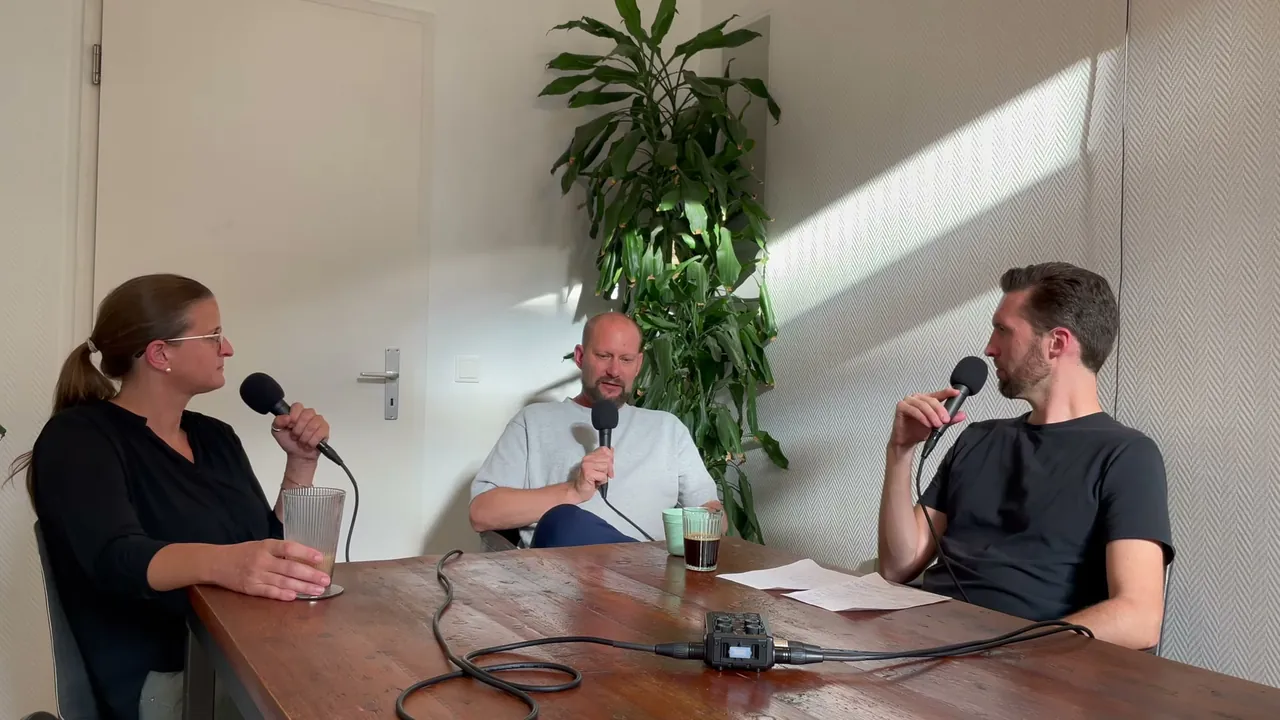
Aufgenommen: Studio Lux, Berlin
 Germany57 Min
Das Video kommt von YouTube und lädt erst, wenn du auf Abspielen klickst.
„One of the most telling things that I have observed recently is that everybody's reporting revenue, nobody's reporting profit.“
Joern Siebke, 05:36
Joern Siebke arbeitet gerade an einer Bank, einem Long-Stay-Konzept und in Regionen, in denen er vorher nicht gebaut hat. Im Gespräch in seinem Berliner Büro sagt er, dass alle Umsatz melden und keiner Gewinn, dass sich Marken kaum noch unterscheiden lassen und dass die Familienhäuser auf dem Land das größte liegengebliebene Potenzial haben. Dazu erklärt er, warum Licht und Interior Design nicht ohne das andere funktionieren und an welchen Kleinigkeiten Lichtsteuerung scheitert.
Die Audiodatei kommt beim Abspielen von Spotify for Creators. Vorher wird nichts geladen.
Kernaussagen
- Umsatz statt Gewinn: Joern beobachtet, dass alle Umsatz melden und niemand Gewinn. Die Kosten steigen schneller als die Erlöse, und langfristig ist das ein Problem.
- Projekte haben sich gedreht: Ohne Transaktionen und ohne Kredite gibt es kaum neue große Projekte. Was läuft, sind Refurbishments und Reflags, bei denen nach einer Woche ein anderer Name am gleichen Haus hängt.
- ESG will keiner zahlen: Jeder will Nachhaltigkeit, niemand will sie bezahlen. Alle wissen, dass die Regeln für Finanzierung und ESG kommen, versuchen aber bis dahin ohne sie auszukommen, weil sie jetzt Kosten treiben.
- Potenzial auf dem Land: Familienhäuser in schönen Lagen haben oft 90 oder 95 Prozent Stammgäste und trauen sich keine Veränderung zu. Es fehlen Mittel, Know-how und Lieferanten, dabei wächst der Markt für diese Häuser.
- Licht trägt das Konzept: Licht und Interior Design existieren für Joern nicht ohne das andere, Licht ist die beste Investition für Konzept und Langlebigkeit. Eine Entscheidung über 50 Cent beim Leuchtmittel kann ein System für 80.000 Dollar unbrauchbar machen.
Shownotes zur Episodeaus dem Podcast-Feed
Joern Siebke is back on the HOTEL-PODCAST, and this time, he’s also featured in our second format, the CONSTRUCTION-PODCAST.
What's his favorite project at the moment? You won’t guess what it is!
Known for his straightforward approach, Joern points out a growing trend: Everyone talks about revenue, but hardly anyone reports on profit. What does this mean for the industry in the long run?
The nature of projects has undoubtedly changed, and more and more, people are asking how to get the most for the least. As a result, many brands are starting to look indistinguishable from each other.
However, smaller gems in the countryside offer a different story. There’s still untapped potential for creating truly memorable moments in these places.
Lastly, we dive into the fascinating relationship between light and interior design—one can’t exist without the other.
Keine Episode verpassen
Folge HOTEL-PODCAST dort, wo du sowieso hörst. Neue Episoden aus sechs Ländern kommen dann ganz von selbst. Oder tritt unserer WhatsApp-Community bei, um über alle Neuigkeiten auf dem Laufenden zu bleiben.
Weitere Episoden
Alle Episoden
Transkript
Transkript öffnenTranskript schließen57 Min · Ronald M. Arndt und Joern Siebke
Automatisch transkribiert mit AssemblyAI, Sprecher automatisch zugeordnet. Nicht redigiert.
- 00:00 Ronald M. Arndt
I think last episode was 81 in one of your hotel rooms, Joern. You know which hotel?
- 00:05 Joern Siebke
Yeah, it was the Marriott in Berlin.
- 00:07 Ronald M. Arndt
So.
- 00:08 Joern Siebke
Now we're not in a hotel.
- 00:11 Ronald M. Arndt
No.
- 00:11 unklar
Now we're in your cozy little office in Berlin.
- 00:15 Joern Siebke
Yes. Yep.
- 00:17 unklar
Thank you for having us here.
- 00:18 Joern Siebke
Absolutely. Happy you guys can make it. I know it's been a long trip, but let's see.
- 00:23 Ronald M. Arndt
Yeah. How's life, Joern?
- 00:26 Joern Siebke
You know, has many different phases.
- 00:30 unklar
Ups and downs, rights and lefts.
- 00:33 Joern Siebke
Some things are good, other things are not so good. But yeah, generally we're in good spirits and, you know, we're enjoying our time, still trying to do the best we can. And yeah.
- 00:46 unklar
What's your favorite thing you're working on right now?
- 00:52 Joern Siebke
My tan?
- 00:52 unklar
Your tan? No, your tan lines.
- 00:55 Joern Siebke
No, we have a number of things going on and all of them are actually quite special, I have to say, because all of them are things that we haven't really previously done like this. So we're working on a bank right now.
- 01:14 Ronald M. Arndt
Oh, cool.
- 01:15 unklar
A bunch of new stuff.
- 01:17 Joern Siebke
Yeah, that's a Bunch of really new stuff, very interesting. We're working on a long-stay concept, which is also new for us, and we're working in some regions that we haven't worked in before in Germany, which is also interesting. So everything's new right now, so everything is quite exciting.
- 01:42 unklar
So it feels exciting.
- 01:43 Joern Siebke
Yeah, absolutely. Yeah.
- 01:45 Ronald M. Arndt
You have to learn new dialects as well, or?
- 01:46 Joern Siebke
No.
- 01:46 Ronald M. Arndt
For the region?
- 01:47 Joern Siebke
No, I don't, I don't do dialects.
- 01:52 unklar
That's a challenge, learning new dialects. Yeah.
- 01:56 Joern Siebke
No, we're not doing that. No.
- 01:59 Ronald M. Arndt
Okay. But new regions, but no, not new countries for you?
- 02:03 Joern Siebke
Oh, not new countries. No.
- 02:06 unklar
No.
- 02:06 Ronald M. Arndt
So talking about hotels, because just mentioned working for a bank, it's completely different, or are there any similar, any?
- 02:16 Joern Siebke
No, it's different. I mean, they have different requirements, different ways of decision-making, different ways of looking at things, really. Some things sound very similar in the beginning, but they turn out not to be. Other things sound very similar but turn out to be very similar, just have a different name. So it's really very interesting. They also have quite involved processes with their employees, which is very different from most hotel projects. Even though everybody right now is very eager to point out how much they appreciate their employees and how much they do for them and give them badges for all types of things, which is great. But with the bank people, I mean, they're really concerned about their employees. You know what I mean? So they go all out making sure Their work environments are just so, and every possible norm and whatever else is adhered to, and they're very much participating in the process of decision-making, which is a little bit challenging from our end, but quite interesting to observe.
- 03:34 unklar
But before we go on talking about hotels, how do you approach a bank nowadays? Because, I mean, bank subsidiaries, aren't they actually closing?
- 03:45 Joern Siebke
Well, I don't know. I mean, I don't know. I don't really keep track of that type of thing, but I think there's different banks that probably have different approaches to what they feel their strength is in terms of the customers that they're serving. I'm sure there are a lot of banks that are actually closing branches.
- 04:04 unklar
Yeah, like a bank concept is not a bank anymore as we know.
- 04:08 Joern Siebke
Right, because they want to cut down on costs and all these types of things and all trying to go digital. But I think obviously there's other banks who see a lot of their business in maintaining personal relationships with clients. I also think it's a little bit of a question of location, number one, and also the type of customer that you're serving, the type of business you're looking to generate.
- 04:39 unklar
Yeah.
- 04:39 Joern Siebke
I think it's one thing to have the people run around with an app so they can get money most conveniently. It's a different customer community that you're serving when you're handing out loans, like business loans. And if that's core to your business, I think it makes a lot of sense to bring the people back into a building.
- 05:00 unklar
Yeah, well, they started creating the bank lobby like a coffee house.
- 05:06 Joern Siebke
Exactly. So all of that is part of what we're doing there. And like I said, it's very interesting. It's a super—
- 05:14 Ronald M. Arndt
Different approach.
- 05:15 Joern Siebke
It's a super pretty building and And very engaged people, you know, on the client side. So it really is quite interesting. Yeah.
- 05:23 Ronald M. Arndt
So coming back to the hospitality industry, what's up in the—
- 05:29 Joern Siebke
I don't know.
- 05:31 Ronald M. Arndt
You tell me. Hotels market.
- 05:32 Joern Siebke
I've been trying to figure that out.
- 05:34 Ronald M. Arndt
On your side.
- 05:36 Joern Siebke
On our side, right. I mean, look, it's— I don't need to tell anyone, you know, it's— times have changed. Business has evolved. Conditions have generally not improved in the real estate industry overall, and specifically in the hotel industry as well. One of the most telling things that I have observed recently is that everybody's reporting revenue, nobody's reporting profit. So everybody's making more money on the revenue side, but it doesn't stick because the costs are obviously increasing much faster and higher than the revenues do. And obviously in the long term, that's a problem, right? And of course, I think like most people, you see this in the projects, you see it in what's happening and how long decisions are taking. You see it in the fact that sooner or later, Most projects run into some sort of financial shenanigans, and there's some sorting out that needs to happen. And oftentimes that means there's going to be programming changes or there's going to be quality changes, or sometimes there's operator changes. And that kind of thing is what happens on a day-to-day basis right now. And that didn't really used to be the case like that. So that's the environment we're in right now. And, you know, keeps it interesting, but, you know, every now and then also quite challenging.
- 07:29 unklar
Absolutely. Yeah.
- 07:31 Ronald M. Arndt
And you're observing these changes after the pandemic or?
- 07:35 Joern Siebke
Yeah, I mean, it's that whether it's strictly related to the pandemic, I'm sure it is somewhere, but I'm not enough of a sort of financial whiz that I can kind of really, you know, draw a straight line from A to B to C, but I mean, you don't need to be a magician to sort of see the connections, right? I mean, if there's no real estate deals, nothing's being sold or bought, there's not going to be any sizable new projects. Nothing's being built because nobody gets a loan for it. So all of those things mean there's going to be less projects. And yes, and the projects that exist are mainly So refurbishment projects where people really need to do something or where they can capitalize on events that are on the horizon. As we all know, everything has become very much event-driven, be it concerts or be it major sports events or what have you. That's really providing the big impact in most markets. Just take the incredible summer of entertainment in Munich that just sort of wrapped up. I mean, these people just went from strength to strength to strength, right? Because they had incredible entertainers come and fill all these concert halls, but they've also discovered—
- 08:55 Ronald M. Arndt
They even built concert halls, huh?
- 08:56 Joern Siebke
Yeah, but they've also discovered that the type of customer guest who comes, they don't spend quite the same way, obviously, than the people who come to spend vacation.
- 09:06 unklar
What would have revenue been without Adele in Munich?
- 09:10 Joern Siebke
Well, I mean, nobody knows, right? But I mean, I don't even know how much money they actually made, just projections. But the point is that the nature of the projects that are currently out there have changed mainly again to refurbishments or reflags where one operator takes over from the other because everybody's after growth. And so that's what's out there right now. And increasingly these things happen very quickly. So you have one day you look at a particular property and it's has name X and a week later you look at it, has name Y on it and all of a sudden you start realizing, well, I guess the difference between those 2 brands wasn't actually that big, was it? Still the same property, right? So yeah, that's the nature of business right now.
- 10:05 unklar
But have the rules and categories changed? For example, one of your favorite topics, sustainability, rules or categories referring to quality and costs and et cetera?
- 10:22 Joern Siebke
I mean, I don't know that they've really changed. I would say that on the subject of sustainability, I mean, I think you were part of that conversation actually that we had not too long ago. And yeah, I mean, our experience with that is that everybody wants it, nobody wants to pay for it.
- 10:44 unklar
Right.
- 10:45 Joern Siebke
And that's, at least in our experience, that's the case everywhere, basically. So is anyone really going to go out and make major changes to a project to accommodate this or that? ESG requirement, not so much.
- 11:13 unklar
But is that a local issue or is it a like Central European issue or is it an international issue?
- 11:20 Joern Siebke
I don't know. I mean, I would venture to say it's an international issue. I'm not, I don't really have the data to sort of back that up. That's just anecdotally. But the thing is that everybody knows like in Europe, these requirements are going to come down the line and it's going to at some point cause problems. People know that there's rules, financial rules and ESG-related rules that are going to come down the pipeline and they're going to bite at some point and for financing and you're going to have to meet those goals. But even though everybody right now is still trying to get away without complying, Mm-hmm. Because it's raising costs right now. And right now, the name of the game is, how can I get the best for the least? That's true for pretty much everything. That's not only true for ESG-related items, but anything really, be it FF&E, be it MEP improvements or whatever, what have you. It's the same everywhere, basically.
- 12:34 Ronald M. Arndt
So in the end, the quality is not the same as before?
- 12:37 Joern Siebke
No, I don't think it is. I mean, I think you see a lot of effort on reducing cost, let's put it that way. The quality that you get for it is not always related to the cost. I mean, let's be clear about that. I mean, we've seen a lot of things happen where there were enormous amounts of money spent on something, and what you ended up getting was a heap of crap, basically. And everybody wondered how that happened. I got a few theories on how that happened, but that's maybe a little bit of a different story. But the point is, right now, there's huge efforts to reduce costs to that bare minimum where possible. At the same time, what we see is that a lot of companies, operators specifically in the hotel environment, they need to sharpen their product.
- 13:33 Ronald M. Arndt
Yeah.
- 13:35 Joern Siebke
Because there's such a glut of brands. So everywhere you look, I mean, we had the subject a little bit earlier, but everywhere you look, it's become more difficult to distinguish between brands, brands of the same operator, major operator, brands of different major operators because everybody's competing in the same space.
- 13:57 unklar
Level.
- 13:58 Joern Siebke
If you look at it, brand tiers and you take it across and you look at sort of the major 6, 7 operators, you will discover that in each of those tiers, every one of them by now has multiple products basically. And yes, oftentimes that makes a lot of sense because a specific product will work better in a specific market, right? But sometimes these products are more or less next door and you're like, well, I don't know what the difference is. I can tell you.
- 14:27 unklar
Yeah.
- 14:27 Joern Siebke
Sometimes I have to go back out and look whether I went into the right door. So those 2 things happen at the same time, the cost pressure and the pressure to differentiate your brand. And that makes life pretty difficult, not only for us, but also I think for the brand people specifically, because they need to find the differentiator. They need to define those things that are actually going to make a difference in the perception of the guest. And increasingly, that's very difficult. And we read a lot of brand briefs because we work for different operators, different brands with different operators. And you do see that Increasingly, the language is quite interchangeable, you know? And so when you read these things and you read through different operators, different brands, and you start finding the same semantics and vocabulary, you start wondering, you know, so what's making the difference here, you know?
- 15:42 unklar
So, it's not the rules or the quality that's been lost or that's That we're losing? It's more like the individual creativity or—
- 15:56 Joern Siebke
No, I think that comes on top of it. Like I said, I think the differentiator conundrum is one thing, is one layer, and another layer is that that needs to happen while you need to save cost, right?
- 16:10 unklar
Something is lost on track there.
- 16:14 Joern Siebke
In some markets. And this is what we're talking about right now is not something that can be sort of extrapolated around the globe, but I think certainly in this particular market and in most markets in Western Europe, that's the case right now. And yeah, so what you see as one of the solutions, my opinion, as one of the solutions is that increasingly the operators basically push soft brands. You know, so, so the collections, the, you know, they all have them, right? It's like the Handwritten Collection, the Unbound Collection, the Luxury Collection, the—
- 16:55 unklar
Urban.
- 16:57 Joern Siebke
Graph Collection, you know, so everybody has these collections and, and it makes a lot of sense because it allows the brands to go in and, and basically, uh, um, you know, bring properties under their umbrella, uh, with an increase, uh, with a decreased, uh, demand on, uh, for the owners to comply with certain rules. I mean, they still have to comply with, with certain rules and certain standards, but it's just the set of those rules and standards is smaller. So the process of conversion is much quicker. So there's a quicker access to additional rooms, right? Room growth. And the cost is lower, and the times that are being afforded to these property owners is usually a little bit longer, so the transition is easier for them. So it makes a lot of sense, but at the same time—
- 17:48 unklar
Yeah.
- 17:51 Joern Siebke
I think there's obviously also a danger really at some point, you know, that you're gonna look at these things, especially in that segment, and you say, well, you know, what kind of collection is that now? You know what I mean? And where that— where the people who benefit from this really the most, you know, are people who are part of the loyalty programs of the individual operators.
- 18:17 Ronald M. Arndt
Yeah.
- 18:18 Joern Siebke
Which again also makes sense because obviously everyone is eager to grow that particular group of guests because these are the guests that, you know, are most loyal, right? And then, and you can cater to best and probably, I don't know the numbers exactly, but probably have a higher average spend, you know, per property and all of those things, you know? So, so it does make sense for the operator to focus on that, you know? So, and that's what's happening.
- 18:46 Ronald M. Arndt
So do you think that these hotels will always stay under the umbrella of the collection or do they will be integrated in the, the brand portfolio one day? What's the plan behind?
- 18:55 Joern Siebke
Integrated in the brand portfolio, but as a collection.
- 18:57 Ronald M. Arndt
As a collection, part of the collection. Yeah.
- 18:59 Joern Siebke
And I think, yeah, they'll stay that way because what makes it very individual.
- 19:02 Ronald M. Arndt
Yeah. Yeah. Yeah. So, so they stay individual.
- 19:04 unklar
Yeah.
- 19:05 Ronald M. Arndt
Yeah. Okay. That's the idea behind. Okay.
- 19:06 Joern Siebke
Exactly. And yeah, I mean, there, and there's a race for that, right? There's a race for individuality, which is also interesting.
- 19:13 unklar
Quite nice.
- 19:13 Joern Siebke
It's nice, but it's also interesting because you do have that dichotomy, you know, that you have the large known brands.
- 19:22 Ronald M. Arndt
Same as with Starbucks, I think, they also bought number 2.
- 19:25 Joern Siebke
And at the same time, you want to project that, you know, you offer a lot of sort of individual experiences. And so it's interesting to see how that plays out, you know, and it does actually lend itself to some very, very meaningful and very interesting conversations. So I think also on the On the operator side and also obviously sometimes on the owner side, asset management side, there are some interesting, very, very interesting thought processes that have developed and some very, very meaningful conversations about where things are going. And it's no longer a sort of very clear-cut thing oftentimes where you say, okay, well, this is brand XYZ. Let's sit down and do that, even if it's a very elevated brand with something that has a lot of individuality to it. I think now there's a much more stringent analysis process relating to each individual property of each individual brand, right? And that, in my mind, that's very interesting and that really makes it worthwhile engaging in these things right now. That's good.
- 20:42 Ronald M. Arndt
What do you, do you think about individual hotels that are not part of such a collection? So that are stay part of family, or how do you see the market for them?
- 20:50 Joern Siebke
Or—
- 20:50 unklar
I like the question.
- 20:52 Joern Siebke
I, you know, it, it's interesting because I think the, I mean, obviously, you know, Germany, Switzerland, uh, uh, Austria, also France, uh, Belgium, Netherlands, you know, there's a huge number of unbranded hotels. Huge, gigantic number. And those are the hunting grounds in some ways for the soft brands, basically. They go around, people go around and they discover properties that are exceptionally well-kept or have a very strong concept and very loyal following, and those properties get approached, you know, and, and, um, so I think that's one category. There's another category, um, of places that, uh, you know, oftentimes have a very long history. So they've been in particular families, uh, uh, you know, for a long time, long period of time, and they're in some incredibly beautiful, uh, settings, you know. I mean, this— I haven't often traveled in Germany. This year I have, uh, uh, and It's taken me some places that I would've never gone if I didn't have a reason to. And you discover these things and you, just by the roadside, you know, oftentimes you see these places and you're like, oh, that's very interesting. You know, that could be great. Unfortunately, it's not.
- 22:23 Ronald M. Arndt
Why?
- 22:24 Joern Siebke
Well, because the quality, I mean, it's—
- 22:27 unklar
Well, a lot of times the shell is great and the inside is not great.
- 22:31 Joern Siebke
Yeah. Also, I think sometimes, I think there's, obviously it's a lack of funds. You know, I mean, it's because it takes, oftentimes it really takes a lot of money to, to, especially if they're, you know, historic properties or, um, you know, things that maybe where there's recently been a change in, in ownership, you know, one generation to the next, the older generation might have, you know, just ridden it out to some point and now you really need to do something.
- 23:00 unklar
Yeah.
- 23:00 Joern Siebke
The younger generation has taken it over and they're trying, but, uh, it's They just don't have the funds for it, but oftentimes I think it's also a little bit of not understanding fully what the potential is that is in it. So the people are, I think, oftentimes very much focused on the local market and whatever market has sort of come to them over time. Oftentimes they have a gigantic percentage of repeat guests, like 90 or 95% of guests that come every year, right?
- 23:33 Ronald M. Arndt
Mm-hmm.
- 23:34 Joern Siebke
to some degree expect to see what they've seen the last year, you know, and some of these places are really afraid of making changes because they think they're going to alienate a lot of the people that have come to them for many years, you know, so they—
- 23:47 unklar
Yeah, but I think they also forget that their guests are maybe turning too old at some point.
- 23:52 Joern Siebke
They do, but it's still—
- 23:53 unklar
So they need to focus on like a younger generation as guests.
- 23:58 Joern Siebke
That's true, but it's a big step and we've done properties like this before, where we were very much part of the conversation within the family. How far should we go? How far should we push this or can we push this? What is it that we want to achieve really? Do we want to have—
- 24:17 unklar
And focused communication. Yeah.
- 24:19 Joern Siebke
Do we want to develop this and become something new, open ourselves up to new Not too new. And some people will sort of fall on that end, others not so much. They're too afraid of it or they just don't see where their customer base should be coming from. They don't know where the market for it, all of those things. Oftentimes they also really don't have access to, let's say, the know-how or the skillset or the suppliers or whatever the case might be. So they're stuck. I mean, stuck, but they're used to also within their locale sort of deal with the suppliers that are there. They go to the tile guy, Mr. Schmidt, who he's done the tiles for 50 years, right? They go to the electrician who's always done the electrical work. They go to the— and the lighting, right? Big mistake. And they go to the local mill worker, you know, who's always done all the closets and all of this stuff, you know. So, but these people, they also most of the time, not always, but always, you know, most of the time, they also don't have, you know, the bandwidth really, you know, or the vision that they will go back to the customer and say, well, listen, why don't you try something new? Because they're oftentimes not exposed to how successful that might be. So I think it's a combination of factors, but I think there is a real potential for a real moment because what I think we see is, obviously that went through the press, that there's a coming backlash in major tourist locations in terms of how many visitors, how many tourists, they're willing to accept at a given time. And this might be a little bit overhyped right now, but I think in general, this is something that is—
- 26:21 unklar
Leisure locations.
- 26:23 Joern Siebke
Yeah, I think that is something that's going to happen because a set number of places attract an ever-growing number of tourists, right? I mean, there's this thing out there, I don't know exactly what the number is, but it's some gigantic number. Like, if the entire Indian middle class were to start traveling like we do, or like the European middle class already travels, every place will be overrun every time of the year with hundreds of thousands, millions of people. And that's just India. I mean, there's many other places in Africa and other places that are developing sizable middle classes very quickly. And if all of these people start traveling to the same places that everybody's already been traveling to, those places at some point will say, you know what? We're done here. You either bring your own water or you're not coming.
- 27:16 unklar
Right.
- 27:17 Joern Siebke
So if you just take that as a development, I think there's a likelihood that in the vicinity or further and larger vicinity of these major spots, people will look elsewhere. They'll go and they'll say, look, oh, the countryside is still very nice. It's not that major spot within the countryside, but why don't we travel around a little bit and then they discover these places. And that's another thing anyway that's, I think, a big trend is like people go and discover. Obviously with the internet and all the information that's available and all kinds of guides and people who, influencers and so forth that do that for people, they roam the countryside basically and say, oh look, there's a place over here, let's go. You know, and then they go in and they check in and they do a, I don't know, like a 5-minute video, right? And somebody sees it and they're like, that's great, you know, why haven't I—
- 28:14 unklar
I want to go there too.
- 28:14 Joern Siebke
So all of a sudden, next thing you know, you have 25 buses in front of your door, right? And you're like, oh.
- 28:19 unklar
Well, what kind of chain reaction do you want, right?
- 28:22 Joern Siebke
No, but so I'm saying that these places, I think, have the ability or the prospect of seeing a lot more business, you know? And also what's happening, I just read an article recently Hyatt, for example, has decided to decidedly go into sort of second-tier locations, so to not only invest into growing their presence in A spots, but decidedly go into B spots because they see the same trend, basically. And I think it's only natural once one of the big guys starts, the other ones will follow if they're not already doing it and they're just not promoting it that way. Yeah.
- 29:06 unklar
Yeah, or they're waiting for someone to be the first one to not be the first one to not make the mistakes you do as a first one, because as a second one, you will not do the same mistakes.
- 29:16 Joern Siebke
Well, or they've just been under the radar a little bit. So it's like I said, it's already happened and you see places, for example, in Poland. I've spent a little bit of time dealing with Poland, which I find super interesting. And there you see a lot of places that have quite sizable development from a hotel perspective that at least me outside of the market had really never heard of. And the same to some degree is true in Romania and the Balkans, also some other places where these people are just, you know, the beautiful places, they're just building hotels. And I think I think here, a lot of those places have hotels. They're family-owned, and these people are faced now, increasingly, I think, will be faced with a choice of, do I become part of some network, some collection, or romantic hotels, or organizations like that?
- 30:23 Ronald M. Arndt
Yeah.
- 30:26 Joern Siebke
Or are we doing it independently? But they will see that the market increasingly will be there, and with the market being there, the rationale will change. Now, if with those 2 things at some point also the attitude of the banks will change, then I think you might see some real development there.
- 30:49 unklar
Right.
- 30:50 Joern Siebke
Obviously right now those conditions remain difficult. But yeah, I think that's the interest right now.
- 30:59 unklar
Some good stuff is being born in our conversation.
- 31:01 Ronald M. Arndt
Happy to hear that there's some light at the end of the tunnel.
- 31:05 Joern Siebke
I think there's a lot of light.
- 31:07 Ronald M. Arndt
A lot of light.
- 31:08 unklar
Light, another nice topic to talk to you about.
- 31:11 Joern Siebke
It's just that the tunnel got a lot longer, you know.
- 31:13 unklar
You always see the light, it just depends on when you get there.
- 31:18 Joern Siebke
Absolutely, yeah, that's true.
- 31:20 Ronald M. Arndt
Depends on your glasses.
- 31:22 Joern Siebke
And how long you have to travel, you know, that you might run into the night before it gets day again, but, you know, that's a different story.
- 31:27 unklar
Talking about light at the end of the tunnel, I think working with you takes you to the light a lot quicker than a long tunnel. I always say it's the most wonderful dependency there is between interior design and lighting. What's your point of view?
- 31:49 Joern Siebke
Yeah, no, I mean, one does not exist without the other. Right.
- 31:54 unklar
That's the most nice—
- 31:55 Joern Siebke
yeah, that's the most wonderful dependency.
- 31:58 unklar
They only coexist.
- 31:59 Joern Siebke
That's a fundamental truth, right? And you can shape one with the other. We're a very visually oriented species. So, you know, what light does to how we perceive things is obviously of paramount importance in any spatial context and also in, you know, providing an emotional response to an environment. So those are things that are just, you know, as I said, fundamental truths. So dealing with that and giving it— calibrating those 2 things together so they actually interreact and reinforce each other in whichever the environment is that you're looking to define is from my perspective, the most critical component of certainly spatial design generally, but particularly in the hospitality environment, for sure. Right. And I never tire of saying that. I don't think that adequate attention is paid to that. I mean, again, it's another one of those subjects where a lot of people think, They're already paying way too much money for it. Why should they be paying more money for it? And again, it's not a question of money. It's predominantly a question of understanding why you need it and what it is doing for you. Then funneling the adequate sort of funds in that direction, basically. But from my perspective and experience, it is— I think I've said that before somewhere— it is the best investment that you will ever make. To underline your concept, Yeah, to underline the concept, but also to sort of provide longevity.
- 34:30 unklar
Human well-being.
- 34:31 Joern Siebke
Yeah, but also to provide longevity in a lot of ways. And to that extent, I think that working with these concepts that provide a level of flexibility is important. And I certainly have my approach to this, which I'm not saying is the one that everybody should have, but— No, that's yours.
- 35:00 unklar
Nobody should have that.
- 35:01 Joern Siebke
It's worked in our context, but I think it's worthwhile, you know, a very thorough thought process what the right approach is in a given scenario. And I think Or I see, we see in the projects that we do or the projects that we know about, that oftentimes that is not the case. It's oftentimes very much a knee-jerk reaction to this way or that way. And I think it would be great if that continued to change. It does change, but again, too often you still see these things and you go into these places and you're like, What happened? Why? And it could have been solved with the same amount of money. Again, it's not a question of money. It's just a matter of paying attention at the right time and understanding what that investment might do for you.
- 36:06 unklar
Exactly.
- 36:07 Joern Siebke
Yeah, absolutely. So that's lighting, that's lighting control. Lighting control is a huge component of this. And also there, there's It's increasingly sort of a predicament because the technology is there and it can work beautifully. The reality is in many, many, many cases, it does not work beautifully, and there's many, many, many issues.
- 36:33 Ronald M. Arndt
Yeah.
- 36:34 Joern Siebke
And in many cases, people get very frustrated with this. So what do they do? They get rid of it or they reduce it to a minimum. Because it's complex and—
- 36:47 unklar
Yeah, or don't pay attention at all.
- 36:49 Joern Siebke
Or don't pay attention at all. But often, I mean, I see more of people actually being frustrated with the fact that they spend a lot of money on it and it doesn't work the way either they thought it was going to work or that it needs to work. The way it should. And oftentimes these things are not a technological question, so they're not a question of can the system actually do this? There, you know, a question of did the people who installed the system understand what it was supposed to do? And oftentimes they don't, you know.
- 37:27 unklar
We experience that a lot. I know what you're talking about.
- 37:30 Ronald M. Arndt
Yeah.
- 37:31 Joern Siebke
And then, you know, yeah. And so then, you know, us, we end up being in our role, you know, we end up being at a given project site or whatever the case might be. And we start discovering, you know what, this doesn't work. This doesn't, you know, these light fixtures or whatever, they're not grouped together the way they're supposed to be grouped together, or they don't dim as they're supposed to dim because somebody decided to not buy the specified light bulb, LED retrofit light bulb that happens to dim to whatever, 5% or 1% or whatever it is, because it would've cost 50 cents more. So There's a snowballing effect of these decisions that are being made where people don't really understand what they're doing and what they're upending with their decision because all of a sudden, because of that 50-cent decision that somebody made way down the line, the $60,000, $70,000, $80,000 system or euro system that you installed does not work properly anymore. So, it's not the 50 cents, it's the $80,000 you already spent that have now gone down the drain.
- 38:39 unklar
Yeah.
- 38:41 Joern Siebke
And these things, this interrelationship of spiraling and snowballing costs and deficiencies, that is very unique to lighting control or building control, but lighting control in particular. And there's a huge amount of frustration out in the market. And when we come to the table and we basically say, look, we need this, it must be, and then oftentimes we'll go and maybe recommend a specific manufacturer, for example, the answer that you get is from some installer or some consultant, don't worry about it, we got this. We understand this. We've been installing these systems for 20 years.
- 39:26 unklar
All right. Well, if you hear that, you know that—
- 39:28 Joern Siebke
I mean, it's fine. Who am I to say you don't know what you're doing? I mean, I'll tell them anyway, but the point is—
- 39:33 unklar
Yeah, you will.
- 39:35 Joern Siebke
I've known you long enough to know that because usually they don't But the point is, at that point, you need to be clear about what the requirements are. What are the features of the system that you need to work later? And once you've given them that and they'll set out doing their magic, and then at the end of the day, it doesn't work out, you still have the same problem. It doesn't work out. The problem with these systems is they're so complex, and when they get installed, you have no way of really testing them. You will only find out when the whole thing is done and you're 2 days before opening, because that's when a stupid idiot like me jumps around the project site and tries to do whatever they think they can be doing, and everybody On the client side rightfully expects that these things will be perfect. That's what they're paying me for, right? For example, and all you can do is like run around, shrug your shoulders basically, and say, well, you know what? It was supposed to work like this, but it really doesn't. No, you can't postpone your opening, right? And it's difficult to explain to people once they're in the door that that chandelier over there was supposed to be lit right now, but unfortunately it's not. Or that piece of art over there, unfortunately, cannot be lit because the group of fixtures over there, whatever, cannot be aimed properly or whatever the case might be because they didn't coordinate properly with the drywall. And there's so many things about this where the people, when they're doing it, don't have a clear understanding what is critical and important about the installation. Both on the actual physical hardware installation as well as the software programming bit of the installation. And you cannot, like I said, you cannot easily verify these things until the moment that they're actually needed and it's showtime. And that has a lot to do with how projects work and how they progress and the fact that every project site will have work being done in it almost until the last minute, which is just the way it is. Furniture being delivered, walls still being painted, all kinds of stuff, right? And from a final lighting setup, that is the last thing that will happen, the very last thing that will happen. Like all the artwork needs to be installed, all the accessories need to be in place. I need to know where every piece of whatever equipment is and how it's being handled there. Is there going to be a lit screen to the POS or not? All of those things need to be there and in place so you can do your final setup. And that moment just does not arrive until 5 minutes before the doors fly open.
- 42:43 Ronald M. Arndt
Yeah.
- 42:43 Joern Siebke
Mm-hmm. Right? And so we try to tell our clients, look, you need to allocate appropriate amounts of time for this to happen. So we need certain things in place and we need to do this in waves. We need to go in and do sort of a rough focus and to the extent that is possible, see that the system works. We don't need to program, but we need to see that the system works. And you, client, please, need to make sure that your contractor understands that and they need to allocate the personnel and the time to do this.
- 43:20 unklar
Well, and additionally, the usability should be easy.
- 43:23 Joern Siebke
Yeah, I mean, that's—
- 43:25 unklar
For the staff and the guests.
- 43:27 Joern Siebke
That's yet another layer that's also problematic, but yes. But once the system actually works, you can always break it, in my experience, you can break it down to a—
- 43:36 unklar
Good usability.
- 43:38 Joern Siebke
Yeah. let's say, reduced complexity so that the property can actually use it. And the people on the property, oftentimes, they're actually quite capable. And when you're in that position, you might actually find someone who's had a lot of experience with that, and that's great. But to get to the point where they can actually take it over and use it and not do something and not know whether that's a malfunction or whether that's actually supposed to be that way, because the property people have no idea. They weren't Part of the design process, you know?
- 44:13 Ronald M. Arndt
Yeah.
- 44:13 Joern Siebke
So, so this, this really all needs to be part of, uh, of, of the final setup of the property. And it's a lengthy iterative process that very rarely, if ever, happens in one shot. You know, oftentimes the people, uh, expect that, okay, fine, now we're all done. You know, get the lighting guy in, let him do his thing. Uh, and then, you know, in a couple of hours he's done. Well, yeah, it's not, it's not like that, you know. And, and, um, like I said, you know, we try to make it a point. Does it help? No, uh, because at the end of the day, like I said, you know, you will be the last guy, uh, running around, uh, and, and, you know, being in people's way because they're doing, you know, operational training, or, um, they might even be already, you know, friends and family guests, or, you know, what have you, you know. Um, So all of those things are a challenge, and I've been doing this for many, many, many, many, many years now in many different locations, and nowhere does it work well, but I have not seen it fail in quite the same way that I have here anywhere else in the world. And I think that is a function of a lot of people technically thinking They know how to put the best possible system together without understanding what the purpose of the system is.
- 45:42 unklar
Yeah.
- 45:42 Joern Siebke
And I find it incredibly difficult in this environment oftentimes to have these conversations because people are very attached or proud to their particular set of knowledge that they've accumulated in a particular way. Contractors have a very particular way of looking at their responsibilities and what it is that they have to deliver versus what would constitute sort of an extra charge or extra service or whatever the case might be. So because we've learned this over time in this particular market. This is why we go in in the beginning and try to really account for this extra time that these people need to spend. And oftentimes what we hear, this is also unfortunate, an unfortunate truth, but it is a truth, is that the contractors will say, well, look, our people are going to be available from, I don't know, 8 in the morning to 4. The hotel operates 24 hours. I cannot dim for a night scene at 4 PM.
- 47:03 unklar
In winter you can.
- 47:04 Joern Siebke
No.
- 47:05 unklar
In Berlin, you can start at 2 PM.
- 47:08 Joern Siebke
Yeah, but no, it's not possible. And so already there, it's very difficult. I mean, extra allowances have to be made and these people are like, well, we're not going to have the people available for this because all of our people live 50 miles away and they have to drive there. Blah, blah, blah, blah, blah. And it's these types of things that where you really see, it sounds irrational, but really see some of these projects fall apart because of these things. And that's something I still, for me, with the experience we've had prior to working in Germany is, to me, that's mind-boggling. I don't get it. I really don't get it, and I don't understand. I refuse to accept that. And oftentimes that becomes a quite interesting discussion, but it's a necessity. It must be done. It must be available. So you cannot, for example, also on the subject of control systems and dimming and so forth, you cannot go through these sites For example, without having an electrician available is not possible because you might run into some technical problem and that needs to be solved. And if you don't solve it, you know, you cannot complete what you're there to complete. Yeah, but you know, the electrician was not available. We couldn't schedule him. Why? Like, how is that possible?
- 48:44 unklar
Then find someone who can.
- 48:45 Joern Siebke
Exactly. Yeah, go and find someone and get these people in here because they have a contract with you, right? But that's a reality here. And oftentimes, I do think that a lot of the things where I said in the beginning, you walk into these properties and they're spanking brand new properties and everything is beautiful, but you look at the light and everything could be beautiful, but the way it's lit, it's just a complete shambles. Everything is super flat and whatever materials they selected and chose, don't come out at all. You know, they're just being washed out. And so you look and you think, well, what happened? And then you remember and you say, well, you know, I think some of that has to do with the fact that at some point the electricians or somebody just decided, you know what, we just don't— I don't have the time to deal with this.
- 49:40 Ronald M. Arndt
Hmm.
- 49:41 Joern Siebke
So let me just do this, right? And some owner Obviously, I mean, you can't expect the owners to have oftentimes to have that particular experience or to have the knowledge about these things. And oftentimes, obviously, they will. And now we're back to the very beginning of what we spoke about. You know, they will look at this from a cost perspective, you know, and if somebody comes along and says, oh, look, you know, the designer wants this thing is very fancy, you know, costs €150 per fixture. You know, I can get you the same thing for like €10. Well, owner, you know, takes 2 pictures, looks at it and basically says, you know what? Yeah, it looks exactly the same. Let's go with that.
- 50:20 unklar
Can't be the same.
- 50:22 Joern Siebke
Yeah, no, I mean, whatever. But you just like, and then of course it doesn't get back to you in, in oftentimes, sometimes it does, oftentimes it doesn't, you know, until they've actually installed it because I don't rummage around in the electrical contractor's, you know, sort of closet there to see what kind of fixtures he's actually going to install. So, you know, then you end up with these things, right? And then, You see and you turn them on and you're like, that doesn't—
- 50:50 unklar
No.
- 50:50 Joern Siebke
No. Yeah, no. But at that point, it's too late and nobody is going to rip out the entire ceiling again to change out all those fixtures because opening day is tomorrow. And once the property is open, we're not going to do that anymore because now we got to make the money back that we invested, which is all understandable. It's just that particular moment where sometimes people really just don't pay attention. I mean, yeah, it's not fully understood what the decisions that are oftentimes being made at that level actually will entail at a later point. And it used to be a little bit different when the technology was more forgiving, right? So when you had lighting systems that were based on halogen lamps and/or were Interchangeable light sources to begin with. So it was very easy. You went and you were able to change out a light bulb, quote unquote, right? And you say, well, this doesn't do what I need it to do. So you come with your different halogen lamp and you put it in and it has a different beam spread and blah. And color wasn't a problem anyway because everything had a CRI of 95+ because of halogen, right? And so those were Those were great times for lighting people because you had a lot of flexibility from a fixture perspective, oftentimes very low cost because these things did a lot of different things or were able to do a lot of different things, and you still had flexibility. Today, that's all very different because you have very dedicated sources, right? Everything is LED and must be LED, right? But the LED light sources are not particularly flexible. You know, today you get them in, you know, whatever, you know, dynamic white, or, you know, there's all kinds of names for basically a light source that is able to—
- 52:50 unklar
Yeah, but still working with it is totally different than it was.
- 52:53 Joern Siebke
Right, you transition between different, you know, light sources or color temperatures, and that's great. But as with all flexibility that's built into these things, Somebody is going to start playing around with it at some point, you know, and then you lose, oftentimes in reality, you lose the composition at the end of the day because somebody decided, you know what, also looks good if it's a little bit cooler, you know, but well, he didn't happen to turn around and look behind him where everything is not the same color temperature, you know.
- 53:24 unklar
Yeah.
- 53:24 Joern Siebke
So you end up having this hodgepodge of things. So, but anyway, so that's a technological development that actually has put more pressure on, on the design side of these systems because you need to be that much more specific about, you know, what type of light source and, and light fixture by which manufacturer oftentimes you will actually need to use in a particular application. And if that gets changed for whatever reason, at a later point, it will have ramifications. And again, those ramifications oftentimes within the process of a project are not fully understood at the given moment. And later it turns out people have forgotten about it or whatever the case might be. And when you discover what the problem actually is, the cost of resolving the problem oftentimes is astronomical because you need to start changing furniture. You need to break open things to find drivers or transformers or whatever. You need to change out light fixtures. One will have— you need a hole that's like 40mm that they've installed, but now the fixture that you can actually get now has 30mm. So now what are you going to do? You have a hole that's too big, you need to change a piece of furniture, or you need to cut new holes in the ceiling. And often, let's say you have an acoustic ceiling or something like that, it's not possible. So the workarounds that you need to find, plus you have a running operation by that time that makes money. So every time you need to shut something down, it's going to cost you money. So the costs that are accumulating to save this stuff or rectify it later oftentimes are prohibitive.
- 55:21 Ronald M. Arndt
Right.
- 55:21 Joern Siebke
So what happens? The thing doesn't get changed and everybody just gets used to the fact that, you know what, yeah, could have been better. Unfortunately, it's not. You know, let's push it off to 10 years from now when we do the next renovation. You know, so it's frustrating oftentimes.
- 55:40 unklar
Yeah, I think we're kind of at the end of our tunnel in the middle of the tunnel.
- 55:46 Ronald M. Arndt
Of course, it's very inspiring. Yeah, it is. Listening to you.
- 55:49 unklar
But the learning is not should have, could have. Pay attention, guys.
- 55:53 Joern Siebke
Yeah. I mean, yeah, pay attention.
- 55:56 unklar
Absolutely.
- 55:57 Joern Siebke
Pay attention, hire good people, and again, there's a reason why certain things have a different price tag than others. That's also a fact. And try to understand fully why something is there.
- 56:17 unklar
And ask.
- 56:19 Joern Siebke
And ask. If you don't understand, ask.
- 56:22 Ronald M. Arndt
Yeah, absolutely. So we'll be back for another episode.
- 56:25 Joern Siebke
Please.
- 56:26 Ronald M. Arndt
For sure.
- 56:26 Joern Siebke
Anytime.
- 56:27 unklar
We will.
- 56:28 Ronald M. Arndt
Perhaps in one of these small hotels.
- 56:31 Joern Siebke
Yeah, absolutely.
- 56:32 Ronald M. Arndt
In the countryside. Let's see. If we find one. Really like the idea.
- 56:35 Joern Siebke
Absolutely. Yeah, if we find one.
- 56:36 unklar
That would be really nice.
- 56:37 Joern Siebke
That'd be a great thing. Absolutely. Yeah.
- 56:40 Ronald M. Arndt
That's true.
- 56:40 Joern Siebke
Real gems out there, man. Yeah.
- 56:42 Ronald M. Arndt
Okay.
- 56:42 Joern Siebke
Absolutely.
- 56:43 Ronald M. Arndt
Thank you.
- 56:43 unklar
A lot of potentials.
- 56:44 Ronald M. Arndt
Absolutely.
- 56:44 Joern Siebke
Yep. Thank you guys. Thanks for coming by.
- 56:46 Ronald M. Arndt
Thank you.
- 56:46 unklar
Thank you very much for your time.
- 56:48 Joern Siebke
Absolutely.
- 56:49 unklar
Bye.
- 56:50 Joern Siebke
Bye.