Hassan Kadbi, Hapimag
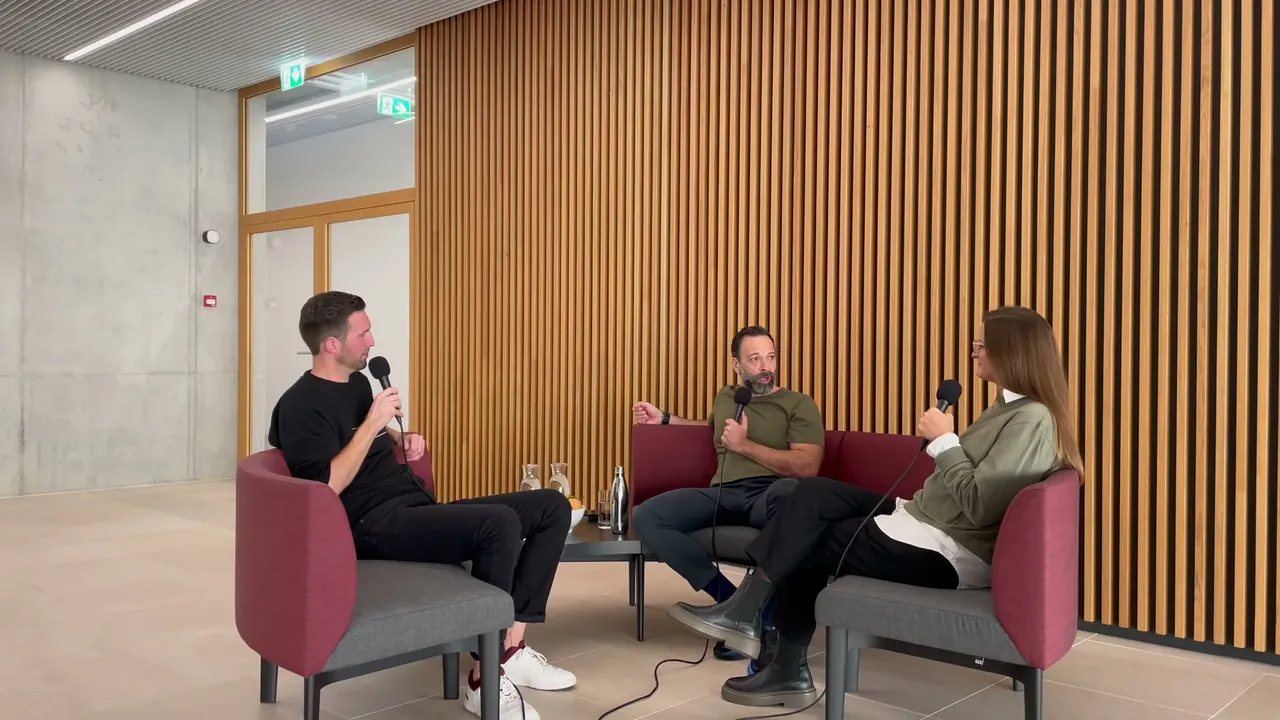
Aufgenommen: Hapimag Headquarters, Zug
 Germany50 Min
Das Video kommt von YouTube und lädt erst, wenn du auf Abspielen klickst.
„we don't have enough capacity for people to stay with us. And that's what we need to really move faster on.“
Hassan Kadbi, 26:18
Hassan Kadbi kam 2005 als Hotelmanager im Hapimag Bodrum dazu, wurde Ende 2016 CEO und führt das Unternehmen seit Januar 2023 im Co-CEO-Modell. Im Gespräch mit Ronald M. Arndt und Katharina Beatriz Varga erklärt er, wie das Aktionärsmodell von Hapimag funktioniert: Kapital aus Anteilsverkäufen baut die Resorts, eine jährliche Subscription finanziert die Renovierung. Mit 56 Resorts, über 100.000 Aktionären und zuletzt 2,6 Millionen Übernachtungen ist das Problem nicht die Nachfrage, sondern die fehlende Kapazität.
Die Audiodatei kommt beim Abspielen von Spotify for Creators. Vorher wird nichts geladen.
Kernaussagen
- Anteile statt Timeshare: Hapimag sammelt Kapital über den Verkauf von Anteilen und baut damit Resorts. Die Aktionäre zahlen jährlich eine Subscription, die die Abschreibung und damit die Renovierung finanziert, und beim Reisen zusätzlich die lokalen Kosten.
- Nachfrage über Kapazität: Empfehlungen und Neukunden bringen noch nicht genug Menschen, weil die Plätze fehlen. Hassan sagt, sie hätten unterschätzt, wie schnell das Interesse kommt, und überbrücken jetzt Kapazität über Kooperationen, etwa mit Hausbooten, einem Berliner Startup mit beweglichen Apartments und einem Haus auf Barbados.
- Co-CEO seit Januar 2023: Hassan hat dem Board 2022 die Co-Struktur vorgeschlagen: weniger direkte Reports und mehr Zeit für Coaching, mehr Tempo bei Entscheidungen, Arbeitgebermarke und Nachfolge. Ohne blindes Vertrauen und ohne Egos im Raum scheitert das Modell.
- 2.500 Neue pro Jahr: Rund 2.500 neue Aktionäre kommen jedes Jahr aus den Familien bestehender Aktionäre, etwa wenn Kinder Anteile der Eltern übernehmen und eigene dazukaufen. Die zweite Quelle, Empfehlungen über das Trial-Programm, und die dritte über digitales Marketing laufen noch nicht gut genug.
- Erst messen, dann handeln: Eine Partnerfirma hat alle Häuser besucht und den Carbon Footprint gemessen, Fokus liegt auf Scope 1 und 2. Umstellung von Öl und Gas auf bessere Heizquellen, Photovoltaik auf Dächern und Flächen, Einkauf saubererer Energie. Papierstrohhalme bringen niemanden auf Netto-Null.
Shownotes zur Episodeaus dem Podcast-Feed
"We don’t have enough capacity for all the people who want to stay with us." This statement comes from Hassan Kadbi, CEO of Hapimag.
Founded in 1963 in Zug, Switzerland, Hapimag operates 56 resorts, primarily across Europe, with additional locations in Turkey and Morocco.
Hassan joined the company nearly 20 years ago as a hotel manager and now leads Hapimag through a co-leadership model.
But what does the company’s vision, "More happy people for a better world," truly mean? And how does Hapimag’s unique shareholder model work?
With over 100,000 shareholders, 2.6 million overnight stays, and 450,000 guests arriving last year alone, the numbers are impressive. However, sustainable growth is key, and sometimes that means no longer being able to accept new shareholders.
As Hassan explains, "This type of holiday model is more responsible and sustainable than, for example, owning a single apartment somewhere. Instead, you have access to 5,000 apartments across Europe and beyond."
With this, Katharina and Ronald send their best wishes to Hassan and the Hapimag team, and look forward to returning next year —dinner by the lake included, of course.
Keine Episode verpassen
Folge HOTEL-PODCAST dort, wo du sowieso hörst. Neue Episoden aus sechs Ländern kommen dann ganz von selbst. Oder tritt unserer WhatsApp-Community bei, um über alle Neuigkeiten auf dem Laufenden zu bleiben.
Weitere Episoden
Alle Episoden
Transkript
Transkript öffnenTranskript schließen50 Min · Ronald M. Arndt und Hassan Kadbi
Automatisch transkribiert mit AssemblyAI, Sprecher automatisch zugeordnet. Nicht redigiert.
- 00:00 Ronald M. Arndt
Hi, Hassan. Welcome on the Hotel Podcast. And not only thank you for your time this morning, also for your time last night and for the dinner we had.
- 00:09 Hassan Kadbi
My pleasure. And we were very lucky with the weather yesterday and today it's looking the same. So hopefully the autumn stays like that.
- 00:19 Katharina Beatriz Varga
Yeah.
- 00:19 Ronald M. Arndt
Yeah.
- 00:20 Katharina Beatriz Varga
And to all our listeners, check out the picture we took last night. It's the proof we had really, really nice weather and probably one of the most beautiful views in Zug.
- 00:29 Ronald M. Arndt
Yeah, Zug, Switzerland. And we are here at the Hapimag headquarters. And I think the story of Hapimag started nearly 60 years ago. Long time ago.
- 00:38 Hassan Kadbi
Yes, it started in 1963. So 61 years. And it was— Hapimag was founded here in Zug by Swiss and German colleagues, friends. And they had this wonderful idea and they set it up then. And 63, 61 years later, we are still here.
- 01:00 Ronald M. Arndt
Okay. You're with Hapimag nearly one-third of these 60 years already. How did you— when did you start at Hapimag and how?
- 01:08 Hassan Kadbi
Almost, almost a third of this. So almost 20 years. I started with Hapimag in 2005, beginning of 2005, as a hotel manager in Hapimag Bodrum in Turkey. That's our largest property. It is about a piece of land which is about almost 200,000 square meters. It's a peninsula with 3 bays.
- 01:32 Katharina Beatriz Varga
Wow.
- 01:32 Hassan Kadbi
A hotel as well as a holiday village with apartments, many food and beverage outlets, wellness, etc., etc. And I started as a hotel manager and later on I moved to become the area manager of Hapimag in Greece, later Greece, Turkey, later Greece, Turkey, Morocco. And then 2013, I moved to Switzerland as Chief Resorts Officer in charge of our resorts and end of 2016 as CEO. 2020, I joined our board of directors And 2023, January, we kicked off a co-CEO structure. And that's my life at Hapimag.
- 02:12 Katharina Beatriz Varga
Nice development.
- 02:13 Ronald M. Arndt
What a career path. Yeah. So not from the intern to the CEO, but from hotel manager to the CEO. And even I did an internship in 2003 at Hapimag. So, but then I stopped there.
- 02:25 Hassan Kadbi
Okay.
- 02:27 Ronald M. Arndt
You bring me back. Let's talk about it later. You just mentioned the co-CEO model. So quite interesting leadership model. Perhaps we can just talk about a little bit later. What do we have to know about Hapimag? So you just said the largest resort is in Bodrum still. How many beds do you have there?
- 02:44 Hassan Kadbi
So it's almost 2,000 beds. So we have about just over 600 keys between apartments and hotel rooms.
- 02:54 Ronald M. Arndt
And overall, a little bit more than 50 resorts, I think.
- 02:57 Hassan Kadbi
Yeah. So we have 56 resorts primarily in Europe other than Turkey. Outside Europe, we have also Morocco, Marrakech, and the rest are all, all in Europe and You know, it's a very interesting portfolio. It's really very varied. So we have many city properties in prime cities, amazing locations, always walking distance to a train station or so. And then we have mountain destinations for skiing. We have beach destinations, mainly for families for the summer. And we have also a kind of country.
- 03:35 Katharina Beatriz Varga
Mm-hmm.
- 03:36 Hassan Kadbi
destinations where people go to enjoy nature, like Tuscany and places that are similar.
- 03:43 Katharina Beatriz Varga
And you work in a shareholder concept, right? And the only one actually that exists in this way.
- 03:51 Hassan Kadbi
That's right. It's a quite unique concept and it was obviously invented much before timeshare. Later, timeshare came and we often get confused or mixed up with timeshare, but effectively we are more really about sharing properties. People who invest together but use individually. And maybe a quick recap on timeshare for the, you know, for the listeners who— some might be familiar with it. So timeshare, the way it worked is that people bought a week somewhere in a resort and went on holiday there. And later it became, of course, like everything else, there was a need for flexibility. So timeshare started allowing exchange programs. So people brought in weeks, took weeks, later they change the 2 points and so on. That's in a nutshell. But effectively, by timeshare, you own a week somewhere in a specific resort. Hapimag is very different. So basically, shareholders own the company because they own shares of that company. And the way it really works is the business model itself is capital is raised through share selling. So we sell shares, we raise capital. With this capital, we build resorts. Then shareholders pay subscription. This subscription finances depreciation. This means with this money, we basically renovate our resorts or their resorts, and then when they travel, they pay a local charge for their costs there. So it's a super flexible system. It's a 3-tier system: invest once, pay subscription yearly, and then pay as you use when you're traveling.
- 05:30 Katharina Beatriz Varga
And that obviously only works as an owner-operator.
- 05:34 Hassan Kadbi
So yes, we are the owners and the operators, so we also actually Even, you know, do all the work that is real estate related, meaning renovating the properties, taking care of the properties, and operating as a hospitality operator. We do have some cooperations with other companies, and that is mainly to bridge the need for capacity or for apartments when there's growth.
- 06:02 Katharina Beatriz Varga
Okay.
- 06:02 Hassan Kadbi
As I explained before, the business model, you know, you sell shares and you build resorts, and you need sometimes to bridge the capacity.
- 06:10 Ronald M. Arndt
So it's all owned by shareholders. About how many shareholders do we, do we talk?
- 06:14 Hassan Kadbi
So we have 100,000 shareholders, a bit over 100,000 shareholders. On average, they have 2 shares per shareholder, and they are spread all around Europe, primarily in the DACH region.
- 06:28 Ronald M. Arndt
So one shareholder is traveling with his family mainly, or so about, about how many guests do we talk about per year, or So for example, last year we did just over 2.6 million overnights.
- 06:42 Hassan Kadbi
There were years where we did 3 million overnights.
- 06:44 Katharina Beatriz Varga
Occupancy of how much?
- 06:47 Hassan Kadbi
Occupancy of, I would say, 70% across the board. But, you know, occupancy, I personally, I'm not a fan of occupancy percentages. They can be deceiving. So are percentages in general, if not linked to a, to an absolute number, you know, because also we are in, in hospitality, and some of our properties are seasonal. So often, you know what occupancy percentage you work with, open 12 months, open—
- 07:14 Katharina Beatriz Varga
And challenge to calculate that.
- 07:15 Hassan Kadbi
That's right. So we talk, we prefer mainly to talk in overnights, and we can say in, let's say, 450,000 arriving guests per year, if that number also, you know, makes it a bit more tangible of how many people come to us.
- 07:34 Ronald M. Arndt
Wow. And I think one of the— you just mentioned it, that here you are. It's quite a nice building. Congrats. Yeah. You opened it in 2018, I think. Yeah.
- 07:45 Katharina Beatriz Varga
And concrete congrats.
- 07:46 Ronald M. Arndt
So it seems to be that there's a vision for Hapimag. Yeah. Because the building already shows, oh, we are on a good track and we want to get the best people here. So tell us a little bit about What you, what you plan for the future?
- 08:01 Hassan Kadbi
Yeah. So, you know, talking about the building, what's probably nicest thing about this building, at least for me, and I think for my colleagues too, is that it's an open office. So none of us have offices, so we just, you know, move around and so on. We, most of us do work at the same place. Some move, some don't, but, but basically it's open. And that's the nicest thing I think about this office. And also what we have seen in the last few years, and, you know, as digitalization becomes more and more important and you start to see some shift in the workforce, Hapimag has become extremely international in terms of staffing. If you have a walk later around the building, you'll see what I mean. It combines all ages, cultures, nationalities, and so on. So it's almost like the multi-generational Hapimag product as is. So it represents also what our guests' combinations are, grandparents, grandchildren, and so on.
- 09:01 Ronald M. Arndt
Okay.
- 09:03 Hassan Kadbi
As far as this office. As far as our plans for Hapimag, we have a very clear vision which says more happy people for a better world. And we built this vision several years back. And when we did it, we always said, is it too cheesy? More happy people for a better world. But actually, we really truly mean it. And we truly believe that when people go on holiday, they become happier.
- 09:29 Ronald M. Arndt
Mm-hmm.
- 09:30 Hassan Kadbi
And that happier people in general are people who contribute to a better world. And that's really our vision and we work on it. Of course, a vision remains a dream, a theory, if not associated with a strategy. So we have a pretty clear strategy that outlines how do we come to that vision. So yeah, I can tell you maybe more about it later, but that's where we are going as a company.
- 09:58 Katharina Beatriz Varga
But what about the name Hapimag? Like associate to happy, but what does it mean? Are there single letters? Do they have a meaning or?
- 10:10 Hassan Kadbi
Yes, we actually, it does stand for many, many letters, but we're happy that it sounds like—
- 10:17 Katharina Beatriz Varga
It sounds like happy.
- 10:18 Hassan Kadbi
Hapimag, but it's actually, you know, written differently.
- 10:22 Katharina Beatriz Varga
Yeah.
- 10:22 Ronald M. Arndt
So where does the name come from?
- 10:24 Hassan Kadbi
You know, I think the name came when the 2 founders did it. they just followed what the company did. So they, for every letter, there is a word. Actually, that's how it came. I leave it to you to look it up, but it's actually a very long story.
- 10:44 Ronald M. Arndt
Okay, okay.
- 10:44 Katharina Beatriz Varga
We'll try to find out.
- 10:45 Ronald M. Arndt
Why did you choose to work in the hospitality sector? So, or what did you do before? So before Hapimag?
- 10:54 Katharina Beatriz Varga
Yes.
- 10:54 Hassan Kadbi
So before Hapimag, I worked for Hilton and before that for other large large companies. But actually interesting, I— why did I choose hospitality? I didn't actually. I ended up by coincidence in hospitality.
- 11:08 Katharina Beatriz Varga
Hospitality chose you.
- 11:10 Hassan Kadbi
So I really had no plan whatsoever to study hospitality. As a matter of fact, the thing I was interested in is to study mechanical engineering or computer engineering at the time. I come from Lebanon, so I grew up in Beirut. And again, maybe for some of the listeners, they might be familiar, you know, Lebanon was a country and unfortunately the same is happening now, that suffered under many different wars and so on. And I wanted to go to another country and for, for, you know, maybe a better future. And I ended up looking for what would be possible for me to travel abroad, get a student visa and so on. And hospitality came up as the first choice. So I took it. But effectively, I had actually already started studying engineering.
- 12:02 Ronald M. Arndt
Okay.
- 12:03 Hassan Kadbi
I switched.
- 12:04 Katharina Beatriz Varga
Yeah.
- 12:04 Ronald M. Arndt
Okay. And do you— are you planning new resorts as well, or what's—
- 12:09 Hassan Kadbi
So at the moment we have— so our portfolio strategy involves 2 main areas, as a matter of fact, 3. So one is constant renovation of our existing properties, as those are our assets, the assets of our shareholders, and we need to always ensure that they are in great condition as well as they are state-of-the-art from look and feel. So that's part of it. Second is we are doing some cooperations to bridge capacity and offer interesting choices to our shareholders. So we cooperate with a company that has houseboats. We cooperate with a Berlin startup that does movable apartments.
- 12:57 Ronald M. Arndt
Mm-hmm.
- 12:58 Hassan Kadbi
And the last, we look opportunity-based. whether there are resorts that could be of interest or location that could be of interest to our shareholders, then we would go for them. But proactively, we focus on the first 2 for the time being.
- 13:16 Ronald M. Arndt
Yeah. Are there any countries or cities your shareholders are asking for from time to time that you're really interested in?
- 13:24 Hassan Kadbi
Yes, we do sometimes questionnaires to ask them. And so imagine Um, the answer that you would get if you ask 100,000 people.
- 13:35 Ronald M. Arndt
Different.
- 13:36 Hassan Kadbi
So yes, they are very different.
- 13:38 Katharina Beatriz Varga
Maldives, Caribbean islands. Can you follow the requests? Um, did you already?
- 13:45 Hassan Kadbi
In some, yes. So for example, we cooperate in with a property in Barbados.
- 13:51 Ronald M. Arndt
Okay.
- 13:51 Hassan Kadbi
And it's loved by our shareholders. They really book it, book it a lot. Um, and, uh, some other places obviously where everyone is Booking, not necessarily in such a quick or short time. Then you need—
- 14:06 Ronald M. Arndt
so in this case, you take the points from the shareholders and pay the resort in Barbados.
- 14:11 Hassan Kadbi
Um, for our shareholders, it depends what type of cooperation. We have 2 types of corporations. We have corporations where our shareholders pay like they would at Hapimag with points, local charges, and then there are others where they have special rates that they pay directly to the relevant service provider. But, you know, coming to your point about, uh, do we follow the wishes, actually what we've seen, um, currently is— and it got boosted during COVID— is the holiday apartment or fully serviced holiday apartment product has really boomed in an organized manner. I don't talk about peer-to-peer Airbnb or a sporadic property here or there. I really mean, um, companies who are now building products instead of a hotel room, an apartment, that it's a chain, that it's a brand promise that has a specific standard. The most players are still currently in business models that are very digital, mainly that don't have actually so many, um, so many, I would say, uh, you know, so many, uh, staff, a little bit very low touch and so on. However, now big players are starting to go into that. Big players, I mean—
- 15:35 Ronald M. Arndt
Heard about it.
- 15:36 Katharina Beatriz Varga
Yeah.
- 15:37 Ronald M. Arndt
Okay.
- 15:37 Hassan Kadbi
So that makes it more difficult to find, obviously, properties when many are searching for that.
- 15:45 Katharina Beatriz Varga
How digital is Hapimag?
- 15:47 Hassan Kadbi
So Hapimag has become I would say actually, you know, digital, maybe to talk about digital. Yeah. It depends what do you mean and what do you want.
- 15:57 Katharina Beatriz Varga
Understand working digitally, right? Yeah.
- 16:00 Hassan Kadbi
There are business models that attract because they are digital or because digital is cool and you have everything in between and you have business models that make only the necessary. Now, in our case—
- 16:15 Katharina Beatriz Varga
Or even digital detox, like you, you Right. Don't work digitally at all.
- 16:20 Hassan Kadbi
Yeah, so exactly, you know, so digital is very— so the definition of digital is like digital before the holiday, digital after the holiday, digital during the holiday. So what we have been mainly focusing on is the digital possibility that customers have pre-holiday because of the product, of the shares, of the points, and all of that that, you know, bringing all of that together. So, um, to make the customer journey as easy as possible. So, you know, in the last couple of years we launched a new website, new booking platform, and, you know, we have a marketplace where our shareholders can buy and sell shares to each other. We have a point platform where people can buy and sell points. As you know, points come from the subscription, they are used to book holidays and so on. And all this is obviously Very digital and very easy.
- 17:19 Katharina Beatriz Varga
And for instance, during the booking process, can the shareholder choose a specific apartment?
- 17:25 Hassan Kadbi
No, or no specific apartments, not, but categories and certain things. Actually, this is a quite interesting topic, and some hotel companies, large hotel companies are working on it. Some have done it.
- 17:42 Katharina Beatriz Varga
Yeah, that you can like choose by the ground floor, right? You can choose Where you want to stay.
- 17:46 Ronald M. Arndt
Right.
- 17:47 Hassan Kadbi
So some have done it, some have abandoned it again because it became a bit problematic. But in general, if you have hotel rooms or hotel buildings that are block buildings and majority of the rooms are the same, or you have only 2 categories, it becomes much easier.
- 18:06 Katharina Beatriz Varga
Yeah, working in categories makes sense.
- 18:08 Hassan Kadbi
That's right. But when you have less categories, it's very easy to offer such, you know, like airline seats, you know, it's pretty simple window aisle, middle, business class, economy, or, you know, that's about it. And with us, it's quite different because we have many different types of apartments. We have larger apartments, smaller apartments, you know, sea view next to the pool, next to the kids club, next to the restaurant, next to the wellness. And then it becomes quite difficult because we have a super flexible system where you can arrive and depart So that makes it quite complex.
- 18:46 Katharina Beatriz Varga
Oh, there's no minimum stay?
- 18:48 Hassan Kadbi
There is no minimum number of stay at all. So some people stay 1 day, some people stay 3, 7, 12. I mean, we have an average length of stay that is in cities, it's in the region of 4.5, in ski properties in the region of 1 week, and by the seaside around 12 nights.
- 19:09 Ronald M. Arndt
So let's talk about a vacation in one of your resorts. What are you offering for the families, for the guests?
- 19:15 Hassan Kadbi
Yes, it's a great question because we have a—
- 19:17 Ronald M. Arndt
Because I think that you have quite boutique properties, smaller ones, then Bodrum, as you mentioned, big ones.
- 19:24 Katharina Beatriz Varga
You need test guests for vacation, workation.
- 19:26 Hassan Kadbi
Anytime.
- 19:27 Katharina Beatriz Varga
Here I am.
- 19:28 Hassan Kadbi
But the thing is, we really have a very varied portfolio. So our smallest property has 12 apartments.
- 19:36 Ronald M. Arndt
Okay.
- 19:37 Hassan Kadbi
And our biggest spa room has 2,000 beds. The portfolio varies also in location and destination. So for example, we have city properties amazingly situated, you know, like Salzburg.
- 19:53 Katharina Beatriz Varga
We were talking about Salzburg last night.
- 19:55 Hassan Kadbi
That's right.
- 19:55 Katharina Beatriz Varga
Which is located literally in the city center.
- 20:00 Hassan Kadbi
Really amazing. So those are our city properties and they are extremely well occupied throughout the year.
- 20:04 Katharina Beatriz Varga
Mm-hmm.
- 20:06 Hassan Kadbi
Then we have properties on the mountains for skiing, and those are Austria, Switzerland mainly, plus a few others, but those are our ski destinations. Then we have seaside properties, Italy, Greece, Spain, Portugal, and so on. And then we have, of course, very nature, I would say, really in the middle of the nature properties like in Tuscany and so on.
- 20:32 Ronald M. Arndt
Mm-hmm.
- 20:32 Hassan Kadbi
So it's very varied. portfolio, it remains quite interesting to the shareholders.
- 20:37 Katharina Beatriz Varga
Are you— no, do you have workplaces or workspaces in the majority of the resorts, or is there also a workplace— actually, it's a vacation, but do you keep in mind that people could also work there, or the guests could work there?
- 20:58 Hassan Kadbi
So as the nature of the product is an apartment, you already have much more space than a typical hotel Naturally.
- 21:05 Katharina Beatriz Varga
Yeah, right.
- 21:06 Hassan Kadbi
So in general, you need a good wireless connection. And, you know, in the old time, people needed printing facilities.
- 21:14 Katharina Beatriz Varga
Now no one really prints.
- 21:15 Hassan Kadbi
And if it's needed, charging possibilities. Yes. So we don't have really— I wouldn't say we have a sector who travel with us to work. Yeah, but to work during travel, it's in general easier in an apartment. And of course, now when we renovate, we make sure that we set up in a way that people can have a corner.
- 21:40 Katharina Beatriz Varga
Yeah.
- 21:41 Hassan Kadbi
To, to work if possible. But we don't proactively promote, you know, working vacations because we really— I mean, you know, our product actually runs like— what would be the ideal way that the product runs for the company and for the customer? So you buy your shares today and you start going on holiday. Then at some point, your kids grow up and they buy their own shares and they go on holiday. At some point, you start traveling maybe only in the low season because you're retired and you want to go a little bit against the traffic to have, you know, your peace and so on. And then you give a few of your shares to your grandchildren, and then maybe you hold only 2 shares instead of 5 or 6.
- 22:29 Katharina Beatriz Varga
Mm-hmm.
- 22:30 Hassan Kadbi
And that's how it could continue. So it's truly a multi-generational product. So coming back to your point, the majority of our customers really travel with us for holidays.
- 22:43 Katharina Beatriz Varga
Leisure, like, yeah.
- 22:44 Ronald M. Arndt
Yeah. And 2 or 3 generations together. It's nice to hear. And I think you're even organizing tours and so on and events. We do not so much as before.
- 22:55 Hassan Kadbi
We used to do that, but there's always a lower need for this, of organized travel.
- 23:01 Ronald M. Arndt
Okay.
- 23:02 Hassan Kadbi
need for it, but not as before, because also meanwhile there are many companies who are offering this, and that's what they do, you know, be it, you know, guided tours and so on. And again, it comes back to digital, so it's scaled, it works very, very well. So obviously it gives you less reasons to try and do organized travel.
- 23:24 Katharina Beatriz Varga
I mean, it's also a question of quality, like Regarding the local offers for tours, etc., and not— you're not a club concept, so that makes sense.
- 23:38 Hassan Kadbi
That's correct. And we actually always did, but now even more, we do work a lot locally in general. I mean, also when we talk about, you know, employment, we also employ local people because our properties are relatively well occupied, even the ones that are seasonal and in more remote locations. Um, it's very helpful for locals when, you know, when, when you offer them jobs in, in tourism. And the longer the period of the job, the better this is.
- 24:10 Ronald M. Arndt
Let's talk about a little bit about challenges, uh, also. Um, I think you always have to find new shareholders as well. It might be one of your tasks.
- 24:22 Hassan Kadbi
Absolutely.
- 24:24 Ronald M. Arndt
It's one— How do you do this?
- 24:24 Katharina Beatriz Varga
Shareholders and And employees.
- 24:28 Hassan Kadbi
Yeah, isn't that—
- 24:29 Katharina Beatriz Varga
those are the 2 tasks.
- 24:30 Hassan Kadbi
So there are many challenges, like everything, but that's what makes life nice, right? I mean, be it business or life, imagine life with no challenges. So yes, there are several challenges. And, you know, I don't know, challenges, opportunities, call them whatever you want to call them. But yes, we do. So if we agree to call them challenges, let me start with the first one that you said, which is new shareholders. Yes, that's It's very important for us. And, you know, Hapimag, as it started in 1963, it had a massive growth at some point and it was organic.
- 25:08 Katharina Beatriz Varga
Mm-hmm.
- 25:10 Hassan Kadbi
But with time, the world moved a bit faster than Hapimag, and then Hapimag became a little bit to the, I would say, to the customers known as maybe a little bit old-fashioned. And that is not true, at least definitely not true anymore. So we had been working very hard the last few years to really change this, and that is changing dramatically, the image. At the same time, of course, we need new customers because that's how the business model can continue going further. And there are different sources to those new customers. One is the family. of the shareholders. And that is working. This source is working very well, especially since we modernized Hapimag. Then the second source is the recommendation of shareholders to other people. That is working, but not good enough as we like it to. And the third is people who don't know Hapimag, who we bring Hapimag to their attention, and then they register with us.
- 26:17 Katharina Beatriz Varga
Mm-hmm.
- 26:18 Hassan Kadbi
We have a trial program. It's as easy as opening an account with any online platform like Amazon, and then you book Hapimag up to 3 times, try it, and if you're happy, you can buy shares from the marketplace, from other shareholders, or directly from Hapimag. That source is also working okay, not good enough yet. Now, why are those 2 sources not working good enough? The reason those 2 sources— the main reason why those 2 sources are not bringing yet enough people as much as we like is because we don't have enough capacity for people to stay with us. And that's what we need to really move faster on.
- 27:04 Katharina Beatriz Varga
So it's not the capacity you don't have for communicating the brand or the product, Hapimag. It's actually offering rooms or apartments.
- 27:17 Hassan Kadbi
And, and because what, you know, coming to, to something we discussed before, it's not very easy to bring very quickly a high-quality product on the market. And we don't want to just have any product, you know, we need to make sure that what we deliver is really matching our brand promise. So, you know, it's positive and negative in a way. It's positive because, you know, If your product is very well-loved and people wait for it, it's good. It's negative that it's a pity you cannot make more people happy. And of course, commercially speaking, the faster you are, you know, the better this goes. So, but really our main issue is that we underestimated, if I may say this, how fast people will show their interest. So according to our plan, we were not really expecting the interest to become as strong.
- 28:16 Katharina Beatriz Varga
Yeah.
- 28:17 Hassan Kadbi
But so we're working on it, you know, through bridging capacity, through, through ensuring that our shareholders get more possibilities to—
- 28:24 Ronald M. Arndt
What might be the solutions to build more resource or—
- 28:28 Hassan Kadbi
So there are different solutions. Building resorts is one.
- 28:31 Ronald M. Arndt
To partner up with Barbados and stuff like that. Okay.
- 28:34 Hassan Kadbi
And yes, exactly. Also another is also renting a resort.
- 28:39 Ronald M. Arndt
Okay.
- 28:39 Hassan Kadbi
It's not lease-rent. You don't always have to build or buy. Long term, yes, because that's our business model. But bridging capacity can happen in different forms. Then the challenge of staff, coming back to your point, is a strong challenge, and it got accelerated again during COVID because a lot of people in the tourism industry lost their jobs and the tourism industry became again less attractive. The tourism industry is a special one. You need to have people who have a lot of passion, people who are very resilient, who have stamina. Look, you work on weekends, you work in In the evenings, you work when everyone else is on holiday. So, you know, that tells you a lot. It's not an easy business. On the other hand, it's a wonderful business. You meet people, you talk to people. The more you travel and work, it really opens your horizon. You learn new languages and so on. So it's very fulfilling. But of course, we see challenges. So how do we deal with those challenges? We have different strategies. So one of the strategies is basically Ensuring that we offer talent the chance to develop and to grow. And that is through training, through regular follow-up of their performance and how can we help them to get better and better. So that's one area. Offering a better working place in every sense, be it a combination of different things, the atmosphere, the possibility to grow, to speak up, to give your own opinion, Not to have very hierarchical, you know, structure, etc., etc., pay the right salaries and so on and so forth. And of course, the third part is where we still cannot find people, we use digitalization to reduce the need for, let's say, the jobs that are maybe more repetitive and simple. Yeah.
- 30:46 Ronald M. Arndt
So let's talk about leadership. Last year you, uh, created the model of a co-CEO model.
- 30:55 Katharina Beatriz Varga
Was that your idea?
- 30:56 Hassan Kadbi
Uh, it was my idea to launch it, but the idea was not my idea in the sense of co-leadership. Co-leadership obviously runs in many, many, um, companies in different countries. Strange enough though, it failed quite a lot when it was done at the top. And many companies, you know, did it and then they reverted. Some hold it. We are from the companies that hold it because we're very happy with it. So maybe I can tell you a few words about it. So I started working at Hapimag almost 20 years ago, had the chance to have different positions. And the truth is, and, you know, it's now no longer a secret if it's on a podcast, each time I wanted to actually leave Hapimag and do something else, Hapimag offered offered me a great opportunity and I took it. But of course, time runs and we don't get younger. And I always thought, oh, one day I'm going to do something else and so on. But also, I think the duty of every CEO and also of the board of a company to ensure that there's proper succession in place and that the company has continuity. So I approached the board in in 2022 with a proposal to implement a co-structure, not because of succession only. Succession is only really one part of it, but of several reasons. One is we have ambitious growth targets, and, um, management team and every person— we were talking about people before— require a different way of work nowadays. You know, like, you know, heading a company or a department where you kind of tell people what to do and so on is really gone a long time ago. So you're required to engage in proper coaching with your team. And if you want to do that, you require more time for them. And if you require more time and you want to give it to them, you would have— it's best to have less direct reports. That's one thing. So I thought with the co-CEO structure, I can focus on half of the team and my co would focus on the other half. The second thing is the speed of things. So again, if you want an organization that runs by itself, that decisions are not made only at the top, again, splitting is not an issue. Third, attractiveness to employees. So employer branding, you know, if we can share at the top, we can share anywhere. And fourth is succession. Of course, you know, anyone can go at any time. And if someone, if a CEO goes, Why should there be pressure in the company? And if you have a cost structure, it it could help. But of course, you know, important though is that in this cost structure, maybe in case you want to know two three things about it, the most important element of it to get started and to do this right is trust. So the two people have to trust each other really blindly. They have to help each other, support each other, hold each other accountable. But they really have to trust each other first. Second, there can be no egos in the room. If there are egos, the structure would fail miserably. There cannot be egos.
- 34:12 Katharina Beatriz Varga
I mean, you're counterparts and there's 100% knowledge sharing and that all these decisions not only happen in one head of it makes sense. How time is developing in this field.
- 34:29 Hassan Kadbi
And, you know, you always have like someone who can challenge you, a sparring partner. And important again as well that you are both accountable, even if you split the responsibility, because you cannot create 2 companies within the company.
- 34:44 Katharina Beatriz Varga
Yeah.
- 34:45 Ronald M. Arndt
So let's talk about people again. So how many people are working here in the headquarters?
- 34:50 Hassan Kadbi
So we're almost under 200. But overall, we are about 2,000 at Hapimag.
- 34:56 Katharina Beatriz Varga
Do you have a mix of cultures here in the headquarters too?
- 35:02 Hassan Kadbi
Yes, we have a mix of cultures. We have a mix of languages. We used to use German as a working language in the past. From 2025, we're switching fully to English as a working language. But now, we currently mix. And to come back to your point, why did we switch to English? We switched to English for a few reasons, but one of them was also attracting more international people and also in the area of tech. Actually, it's sometimes very difficult to find people who, you know, who speak German. English is much easier.
- 35:44 Ronald M. Arndt
Okay. And you think that— yeah, okay, interesting. So people talking about tech, sure. And these people, perhaps they don't live here, they don't come to Zug, they don't move to Zug. But for others, yeah, might not be a problem. No, not for youngers, not for youngers at least.
- 36:01 Hassan Kadbi
And we speak English here. But of course, we still, when we take colleagues in departments like customer service and so on, they speak German. You know what's special about Switzerland? And, you know, some people ask, why do you keep your support center in Switzerland? I think keeping the support center in Switzerland and not outsourcing it to, to Asian countries, or I would say a little bit payroll, less payroll expensive countries, has also advantages in the sense of, you know, we're a Swiss brand, we stand behind our Swiss quality, and, you know, we don't serve just customers or only customers. Our customers are also our shareholders. So, you know, that's extremely important because we also do stuff that are shareholder related. I mean, I don't want to bore you with the complexity such a company. But actually, we run a general assembly. We, you know, we're public. We're not listed, but we're public. So we actually do almost everything a listed company does, with some variances as we are not listed. So we do a lot of shareholder relations and not only customer relations. Then the additional benefit being in Switzerland, the default position of almost every Swiss is at least 3 languages, you know, German and French, or German, Italian, and English, German, French, and English. Some speak German, French, Italian, and English, and so on. So that is A huge, a huge benefit.
- 37:24 Katharina Beatriz Varga
Yeah.
- 37:24 Ronald M. Arndt
Now, we just— you just said that it's difficult to split the cake in even more parts. So it's not from your interest to get a lot of new shareholders. But if you would want to find new shareholders, what's a way to find them?
- 37:44 Hassan Kadbi
So look, it comes back to those 3 sources that I mentioned before. I think the The lowest hanging fruits are the family of shareholders that I have. Because they know the product, they like the product.
- 37:58 Ronald M. Arndt
So it's mouth-to-mouth. Exactly.
- 38:00 Hassan Kadbi
So we only need to be sure that this company is attractive, it's healthy, and they want to continue spending their holidays with their children in it and not only their childhood holidays. So that's a very effective source. And the truth is we have about 2,500 new shareholders every year that come from this source. Talking numbers.
- 38:20 Katharina Beatriz Varga
2,500 per year.
- 38:22 Hassan Kadbi
Yes, who come through the source, who say, okay, I take the shares of my parents, you know. They don't increase the number of shares always, but it's a new customer. So I take, let's say, 2 shares from my parents and add 1 or 2 shares to it.
- 38:37 Katharina Beatriz Varga
Yeah, I mean, and the turnover is automatically higher if they don't always come together a bunch.
- 38:45 Hassan Kadbi
Of course, of course, of course. It adds to that, you know, it That's correct. And the second source is referrals through shareholders, which means a shareholder tells, hey, I was at Hapimag, it's a great holiday. If you want to try it, here you go. That's the trial program. Book and go on holiday. What we have seen is in the last years, we launched this trial program, but coming back to the capacity issue, I saw something quite interesting that many people register to the trial program, but they don't book a trial stay. They actually go directly and buy a share and become a shareholder. And the third source, which is people who don't know Hapimag. Now, that's the most difficult one. And here our main approach is digital marketing, digital marketing through different sources, be it social media driven by influencers, Google Ads, you know, so the typical You know, typical ads that you do.
- 39:44 Katharina Beatriz Varga
Our podcast will increase.
- 39:46 Hassan Kadbi
Your podcast hopefully will bring us a few thousand people. And we have started a brand TV campaign and we did quite a bit in Germany and in Switzerland. And we continue to do more. Of course, you know, digital marketing doesn't— I don't want it to sound like a generic word. Of course, it's broken into many different different, uh, activities.
- 40:10 Ronald M. Arndt
Yeah, but shareholders are mainly coming from the German-speaking countries. Yeah, currently, uh, Senadir, too.
- 40:20 Hassan Kadbi
I would say the new customers are 50% from the DACH region and 50% from other countries.
- 40:25 Ronald M. Arndt
And other countries are?
- 40:26 Hassan Kadbi
So other countries are Italy, Holland, um, Turkey, and international Okay.
- 40:37 Ronald M. Arndt
So even for an international, non-European person, it's still a possibility though?
- 40:42 Hassan Kadbi
Yeah, we don't proactively push in such markets, but you know, I mean, internet, right? You can find anything. Or in today's world of mobility, friendship, I mean, I don't know about you, but I'm sure you probably, if I would tell you, name for me 10 friends you have outside Europe, you would come up with it instantly. And I think that's what, what Yeah.
- 41:01 Katharina Beatriz Varga
So there's still a lot of potential because that's another source, just working internationally or even trying to find shareholders outside of Europe.
- 41:12 Hassan Kadbi
You know, the potential is really great. I really truly believe the potential is great. The question is, what type of growth do you want? Do you want exponential fast growth or do you want sustainable growth? We go for sustainable growth.
- 41:23 Katharina Beatriz Varga
Sustainable because you need the positive experience first.
- 41:27 Hassan Kadbi
That's right.
- 41:28 Katharina Beatriz Varga
Mouth to ear.
- 41:28 Hassan Kadbi
That's right. You know, it's not about— in our case, it's not about scaling. You know, we're not a company that generates profit to pay dividends.
- 41:36 Ronald M. Arndt
Yeah, yeah. That's such a big difference.
- 41:37 Hassan Kadbi
We reinvest them in improving the product, basically. So, so, and you know, does every company really have to grow exponentially? You know, I think that's a question we all should probably ask ourselves. And, you know, I mean, Growth is very important, very, very important to keep a living body good, even for us as humans. We go, we exercise, we make our strength grow so we can live healthy and so on. And also companies need that, and you need profits to reinvest it in the company and so on. The question is, do you want to grow beyond control? And some companies maybe do, some don't, but not everybody does. If we want to talk specifically about sustainability, about responsibility and so on, uncontrolled growth, in my view, is very unhealthy for the world.
- 42:37 Katharina Beatriz Varga
Dangerous.
- 42:37 Hassan Kadbi
Absolutely. Very, very dangerous. And I don't think science at the moment is moving at the same speed to regenerate our world like growth is, if the solution is in science. And of course, now we can have a philosophical discussion about this. Maybe that's not the aim of today. But I think growth has somehow to be sustainable if we really want to hold our responsibility as business people and as humans.
- 43:05 Katharina Beatriz Varga
Talking about sustainability, 2050, what is your strategy?
- 43:12 Hassan Kadbi
That's a great question. I mean, the 2050 net zero is a known goal, not only for us, but all companies want to be carbon neutral. So we actually, what we did, we started working on this topic very proactively a few years back and we approach it in a way we set first a list of actions and then strategy comes later because we have no time to strategize for a while. And the strategy is more complex because you need to take into consideration things like reporting and so on, which are a bit more complex. So you have to work parallel on this. So what we did is we have been working with a company the last couple of years that has visited all our properties and we did a proper measuring of our carbon footprint. And then we are putting together a longer-term plan and a midterm plan of how do we bring this to zero. But meanwhile, we start to take some action. So we have made several projects in the last years of changing from oil, from gas to better sources of heating. We have installed a lot of photovoltaic plants on the top of our buildings in some resorts, some are on pieces of land, and so on and so forth. And we have— we work proactively on buying cleaner energy where we buy energy. So basically that's the environmental part of the ESG or of the whole sustainability reporting framework and so on. And there basically the main focus is Scope 1 and Scope 2 emissions. So energy we produce like emissions we produce through activity, direct activity, and emissions we produce through buying energy. Scope 3 is a bit more complex because Scope 3 is very difficult to measure.
- 45:06 Ronald M. Arndt
That's right.
- 45:07 Hassan Kadbi
Although Scope 3 for our industry is the biggest, I would say, carbon producer. You know, in a perfect world, if everyone does their Scope 1 and Scope 2 correctly, there would be no Scope 3, right? Because Scope 3 is like for you coming here, and if you came here carbon neutral, Then I don't have scope three per se. But of course, the world is not perfect, so we have to work on scope three. Then we have the social, and the social part is you know we talked briefly before about what do we do under employment? What do we do under engagement with local communities? There we didn't talk much about it, but we work also with local communities. We promote you know local community things and so on. And the third one, which is governance, and governance is an area where we. We work throughout really the whole company since a few years, from the board all the way through our resorts. And there are areas that cross between governance and social or governance and environment. But we've launched recently a supplier code of conduct. We had our own code of conduct and so on. It's a massive plan coupled with a strategy that, you know, we work on regularly. But most importantly is we started by measuring because you cannot improve what you cannot measure, or at least you cannot scientifically improve what you cannot measure. So we had to make sure that we can measure things and then our actions when it comes to specifically the environment, it's It's good to take action not only— some people say you should not take action on the basis of passion. I disagree with it. I think you should not take action only on the basis of passion because I think you have to care and you have to have passion, but you have to do it where you can make impact. So they have to be material enough to make a difference. You can, of course, use paper straws. That's okay. a good idea, but that is not going to bring you to net zero. Yeah.
- 47:19 Ronald M. Arndt
What a ride, huh?
- 47:21 Katharina Beatriz Varga
Yeah.
- 47:21 Ronald M. Arndt
Through the Hapimag story.
- 47:22 Katharina Beatriz Varga
Yeah. Amazing. Really amazing.
- 47:25 Ronald M. Arndt
Yeah. When did you meet one of the founders for last time? No more than—
- 47:32 Hassan Kadbi
So I met the founder who still lives and who lives in Switzerland. I met him at our general assembly and we had lunch together before the assembly and he joined the assembly, which was now 4 or 5 months ago.
- 47:50 Ronald M. Arndt
Okay.
- 47:51 Hassan Kadbi
And normally we meet once a year for a meal or something. He's extremely active and still travels. He's 93.
- 48:00 Katharina Beatriz Varga
93? Just turned 93.
- 48:02 Ronald M. Arndt
Yeah, and he knows you for a long time already. Yeah.
- 48:06 Hassan Kadbi
Yes, he knows me since I moved to—
- 48:08 Ronald M. Arndt
Crazy. Yeah, Hassan, thanks a lot.
- 48:12 Katharina Beatriz Varga
I think we can think about a part 2 on this conversation.
- 48:17 Ronald M. Arndt
Yeah, because—
- 48:17 Hassan Kadbi
We have a lot of topics.
- 48:18 Ronald M. Arndt
No, because the vision is that clear and yeah, the ownership model is so interesting compared to other concepts that we meet here on the Hotel Podcast. So, um, yeah, cool.
- 48:34 Hassan Kadbi
Thanks. Since, since you took the time and you gave me a microphone, if I can just maybe say 2 thank yous, uh, in case some of our listeners are shareholders, because I truly believe that this company can only, um, exist because of shareholders, because they really decide to continue making their holidays, uh, with us. And I think the second thank you that is still to the shareholders is by really making such type of holidays. I truly believe it's, it's a responsible and a sustainable way rather than maybe buying own apartment somewhere or, you know, but have the access to 5,000 apartments all around Europe and some other countries. And of course, a super special Thank you. Now we get the chance to talk here. I appear maybe in front of a camera, but actually the whole work, the work is done by another 1,999 people in the company who really make this company very, very, very special. So I think sometimes, you know, CEOs or co-CEOs, they get the attention, but the spirit is spread.
- 49:48 Katharina Beatriz Varga
But that's true.
- 49:50 Hassan Kadbi
is that everybody else contributes.
- 49:53 Ronald M. Arndt
All the best for the whole Hapimag family. All the best for the future. And yeah, we'll be back.
- 49:59 Katharina Beatriz Varga
Yeah, we will.
- 50:00 Ronald M. Arndt
Definitely. Katharina.
- 50:01 Katharina Beatriz Varga
Thank you so much, Hassan.
- 50:02 Ronald M. Arndt
Thank you, Hassan. Bye.